
Kerim's Triptych ❧ Reformasi, Puzzles, 500 Songs
Welcome 👋 to Kerim's Triptych, a free newsletter that delivers three fabulous links to your inbox, two or three times a month. (If you didn't intend to subscribe, or you don't want to receive these anymore, there is an unsubscribe link at the bottom.)
1️⃣ Reformasi Repeat?
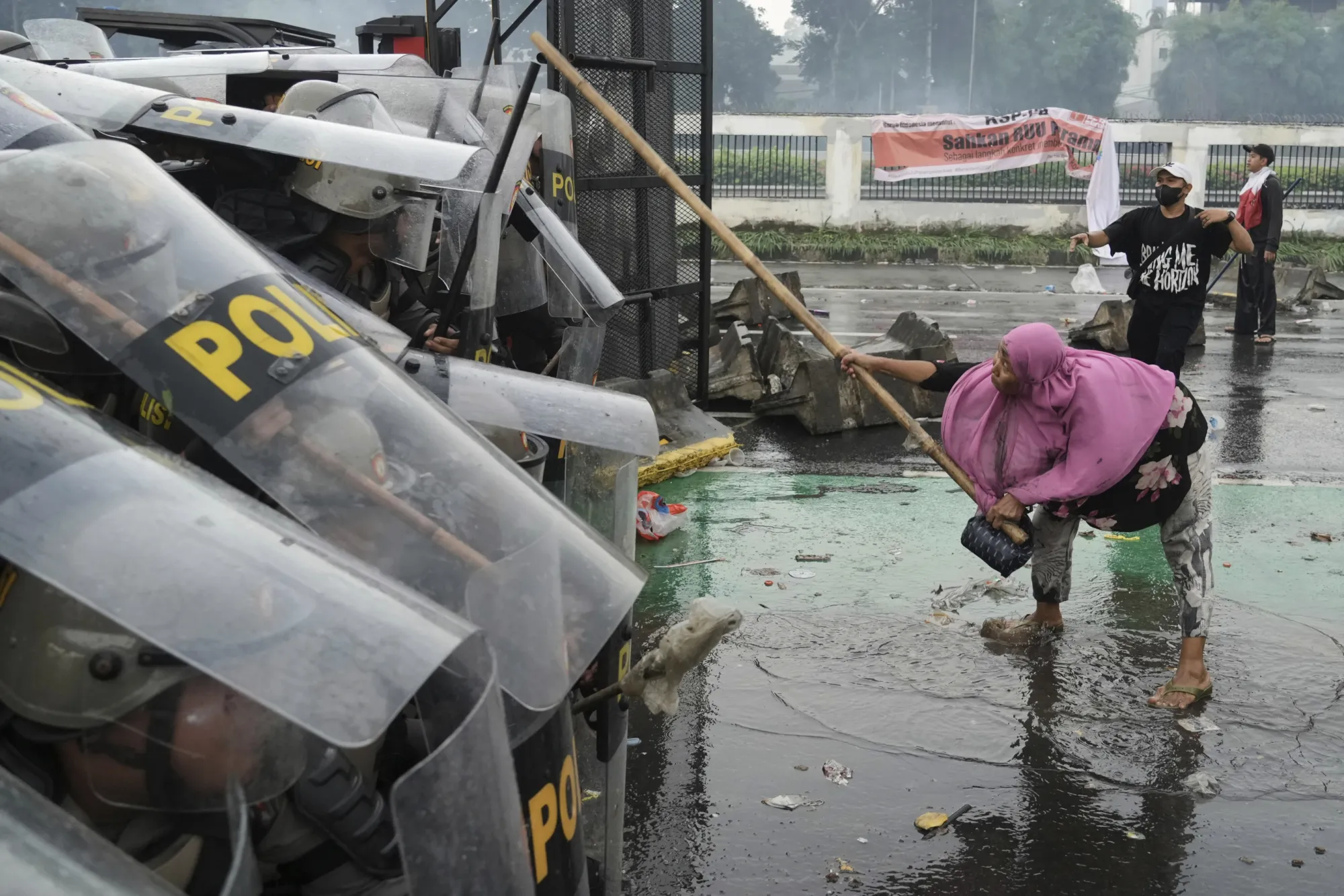
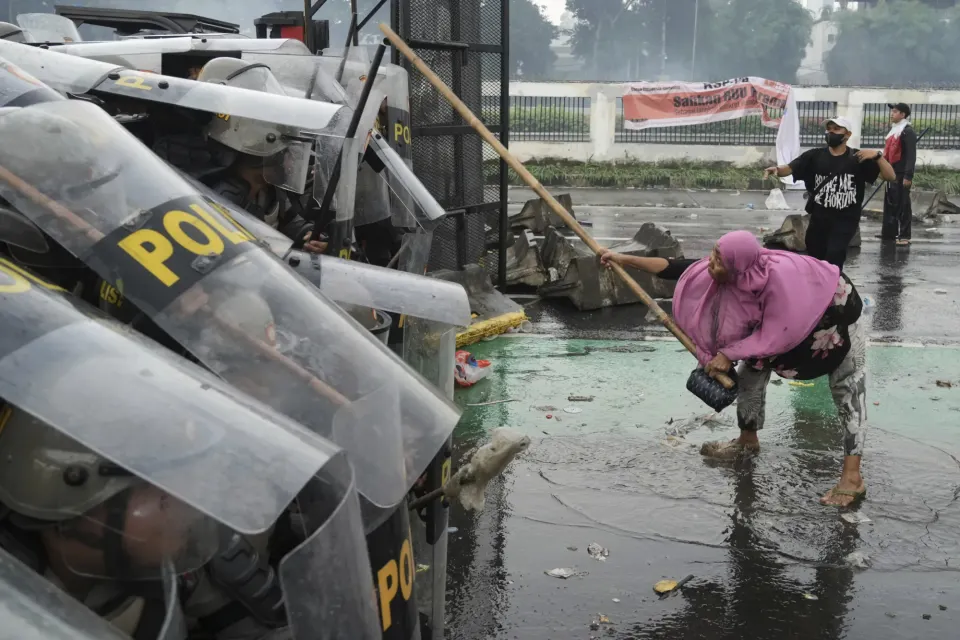
Reformasi was the name for the 1998 student movements in Indonesia which toppled Suharto. Today we once again see massive country-wide protests in Indonesia, but there are major differences. Edward Aspinall does a great job at laying out the similarities and differences between 1998 and 2005 in this article in new mandela.
Like 1998, the protests followed years of build-up:
Perhaps the greatest similarity between 1998 and 2025, however, is that both protest waves built on a subculture of street protest that had been growing for several years. . . Today, the dynamics are similar. The protests of 2025 definitely did not come out of nowhere. Instead, they are at least the fifth major wave of youth-led mass protest since 2019
Unlike 1998, the demands are much more diverse:
The political objectives of the current protestors, in contrast, are much more diffuse than those of their forebears in 1998. What gave the Reformasi movement much of its power was the precise nature of its goals, embodied in a number of daunting, but ultimately achievable, goals: the overthrow of Suharto, the end of the military’s “dual function” (dwifungsi), the dismantling of restrictions on political expression, and so on. Those goals could be achieved in part because the protestors were able to find allies, not only among members of mainstream political parties, religious organisations and the like, but also within the ruling civilian and military elite, many of whose members ultimately abandoned Suharto and threw in their lot with Reformasi.
Today the protestors’ goals are not limited to forcing out any particular leader or party, or even to repeal a limited set of laws or regulations. To be sure, they have many such targets—many of the protestors call on President Prabowo Subianto to step down, for the DPR to be dissolved, and for various laws and regulations to be repealed. But what they really stand for, above all, is rejection of the entire ruling elite.
And the entire ruling elite, more or less, stands united against them.
2️⃣ Historical Puzzles
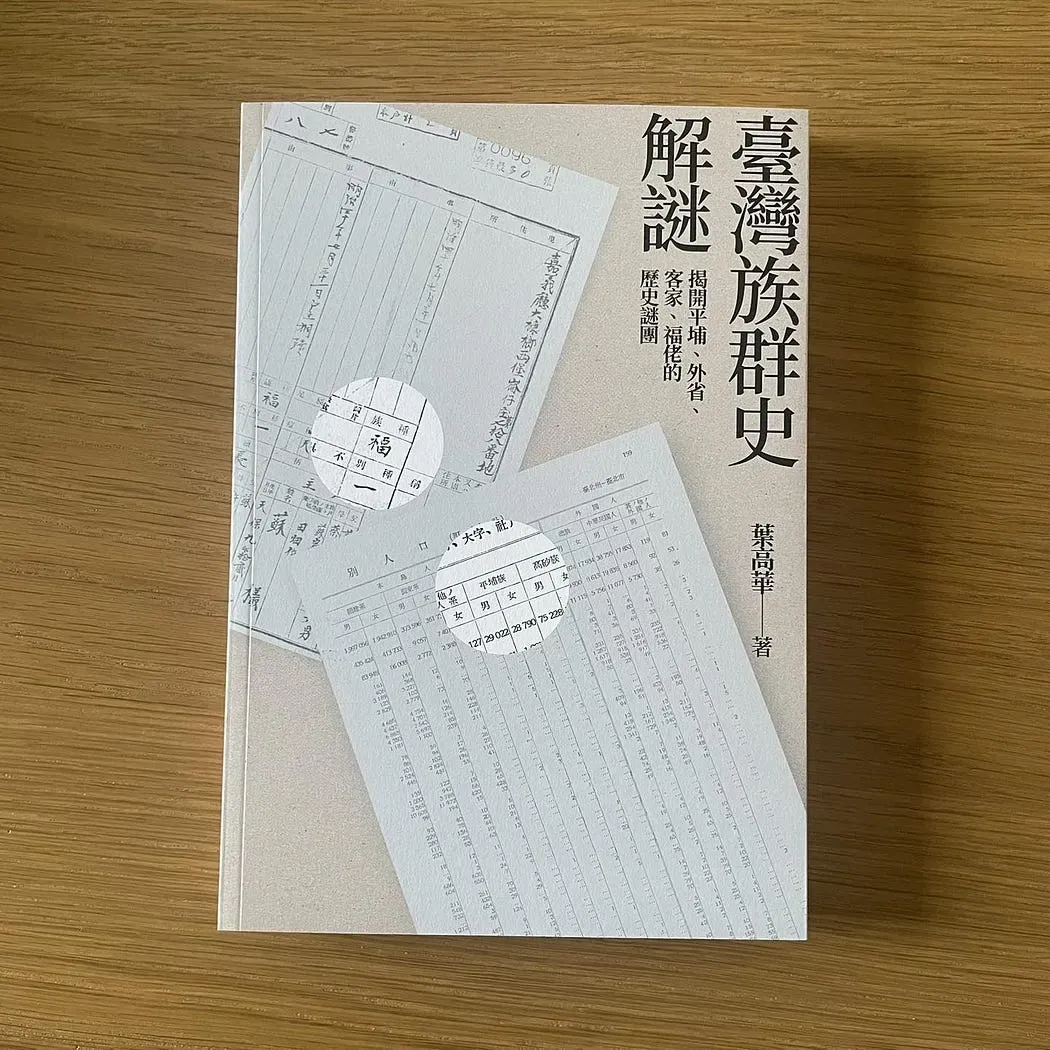
I've long been a fan of Yap Ko-Hua 葉高華, who used to run a wonderful blog (地圖會說話) about the stories maps could tell about Taiwanese history and demography. Now a professor in the sociology department at National Sun Yat-sen University, he has published a book on the historical demographics of Taiwanese ethnic groups, Unraveling the Historical Puzzles of Taiwan’s Ethnic Groups 臺灣族群史解謎. The book is in Chinese, but he's published a detailed summary of the book in English.
He wrote the book in order to answer a number of questions, the "historical puzzles" of the title. I won't list all of them here, but they can be divided up into three broad sections. The first concerns the relations between Hoklo and Hakka.
My first puzzle arises from the distinction between Hoklo and Hakka. In the past, official classifications were based on provincial origins, specifically Fujian and Guangdong. This can be seen in the Qing dynasty’s allocation of civil service examination quotas, as well as in the household registration system during the Japanese rule period. Has this long-standing division between Fujian and Guangdong been entirely replaced by the contemporary distinction between Hoklo and Hakka?
This question is crucial because the two classification systems are fundamentally different. Fujian and Guangdong refer to provincial boundaries, whereas Hoklo and Hakka are distinguished by language. These boundaries and linguistic groups do not fully align.
He develops this in a number of chapters looking at the relationship between these groups. Interestingly, he "discovered that Hoklo women in regions near Hakka communities had a significantly lower rate of foot-binding compared to those in other Hoklo-majority areas."
Second, he turns to the claim that “most Taiwanese have Pingpu Indigenous ancestry," asking: "Was intermarriage between Han people and the Pingpu Indigenous truly as common as claimed?" He answers as follows:
Han who were a minority in Pingpu Indigenous villages were more likely to intermarry with the Indigenous community. However, once outside of these Indigenous villages, this tendency largely disappeared.
He develops this by exploring the history by which Pingpu groups ended up being excluded from the category of "Indigenous," something that is only now being rectified as a result of an order by Taiwan's Supreme Court.
Finally, he turns to the question of Mainlanders. Anyone who has tried to write about the history of ethnic relations in Taiwan will have run into the lack of clear statistics stating the exact numbers that came over after World War II.
It wasn’t until 2018, when a batch of “Executive Yuan archives” was declassified, that information from the 1956 military census became accessible.
In the sixth chapter of this book, I use these declassified documents and demographic methods to calculate that, as of September 16, 1956, there were 1,024,233 Mainlanders — both military personnel and civilians — who had migrated to Taiwan after World War II. The sex ratio of these migrants was highly imbalanced, with 375 males for every 100 females.
He then ends with an exploration of the extent to which speaking Mandarin at home, as was the case in most Mainlander families, helped with educational attainment. He finds that "the educational advantage of Mainlanders purely stems from the favorable socioeconomic position of their parents," not their home language.
3️⃣ 500 Songs
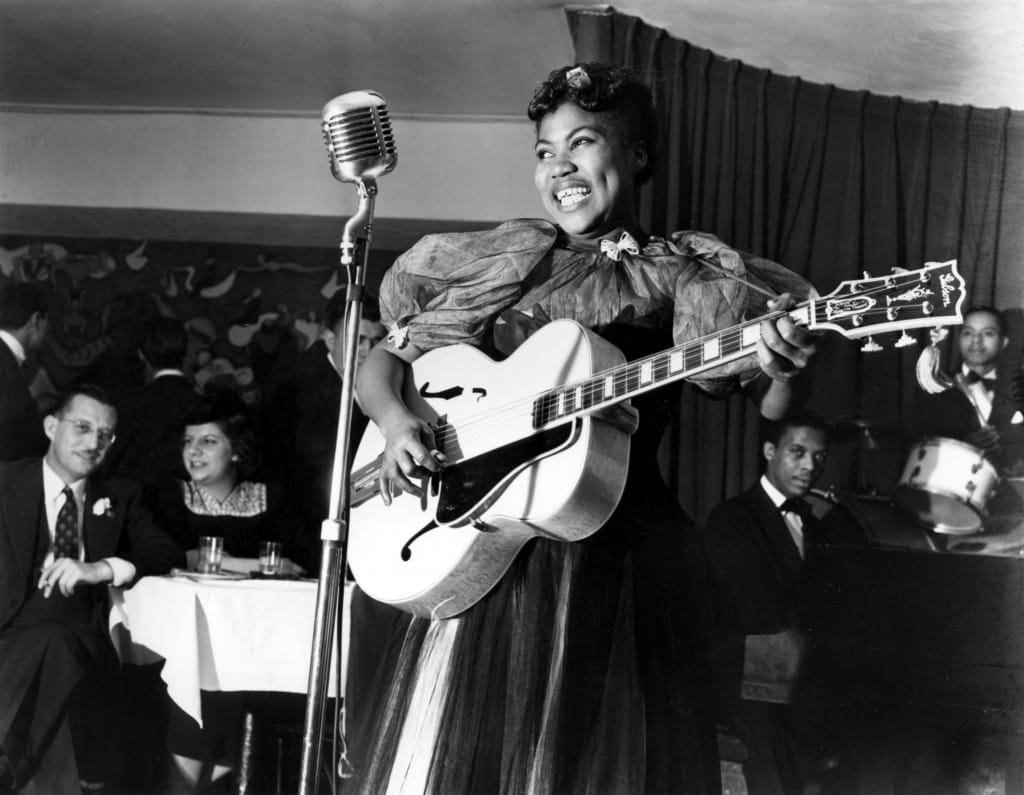
I was depressed recently because I've begun to suspect that one of my favorite history podcasters has started to use AI to help with his writing. Whatever the reason, the show has become unbearably repetitive, with the same information being presented in multiple ways, sometimes even using the same phrases multiple times an episode. Needing a new podcast to listen to, I was delighted when Aaron Bady mentioned Andrew Hickey's A History of Rock Music in 500 Songs on Bluesky. I'm not very musically literate, but this podcast does a fantastic job of explaining both the evolution of various musical styles and the sociocultural context in which they emerged. I am totally addicted to it and listened to the first dozen episodes on my last plane flight.
Endnote
❤️ Enjoying Triptych? Let your friends know! Encourage them to sign up via the Triptych website. I can't begin tell you how happy it makes me to see even one new subscriber!
💬 Or maybe you'd consider writing a short endorsement for the "kudos" page? You can just email it to me, or fill out this Google form.
💰 Want to ensure the long term sustainability of this newsletter? Consider becoming a sponsor. Sponsorship helps pay for my hosting costs as well as the newspaper and journal subscriptions which, in turn, allow me to provide "gift links" to all subscribers. A big shout-out to my current paid subscribers, you help keep me motivated!
🧧 Don't want to enter into a long term commitment, but still want to support the newsletter? You can always leave a one-time tip if you like.
🦋 Three links not enough for you? Follow me on Bluesky for all the links that don't make it to the newsletter. The newsletter also has its own Bluesky account.
Thank you!
Member discussion