Kerim's Triptych ❧ Redshirts, Panspermia, Uhura
Welcome 👋 to Kerim's Triptych, a free newsletter that delivers three fabulous links to your inbox, two or three times a month. (If you didn't intend to subscribe, or you don't want to receive these anymore, there is an unsubscribe link at the bottom.)
If you enjoy Triptych, please tell a friend about it. Thanks!
1️⃣ Redshirt
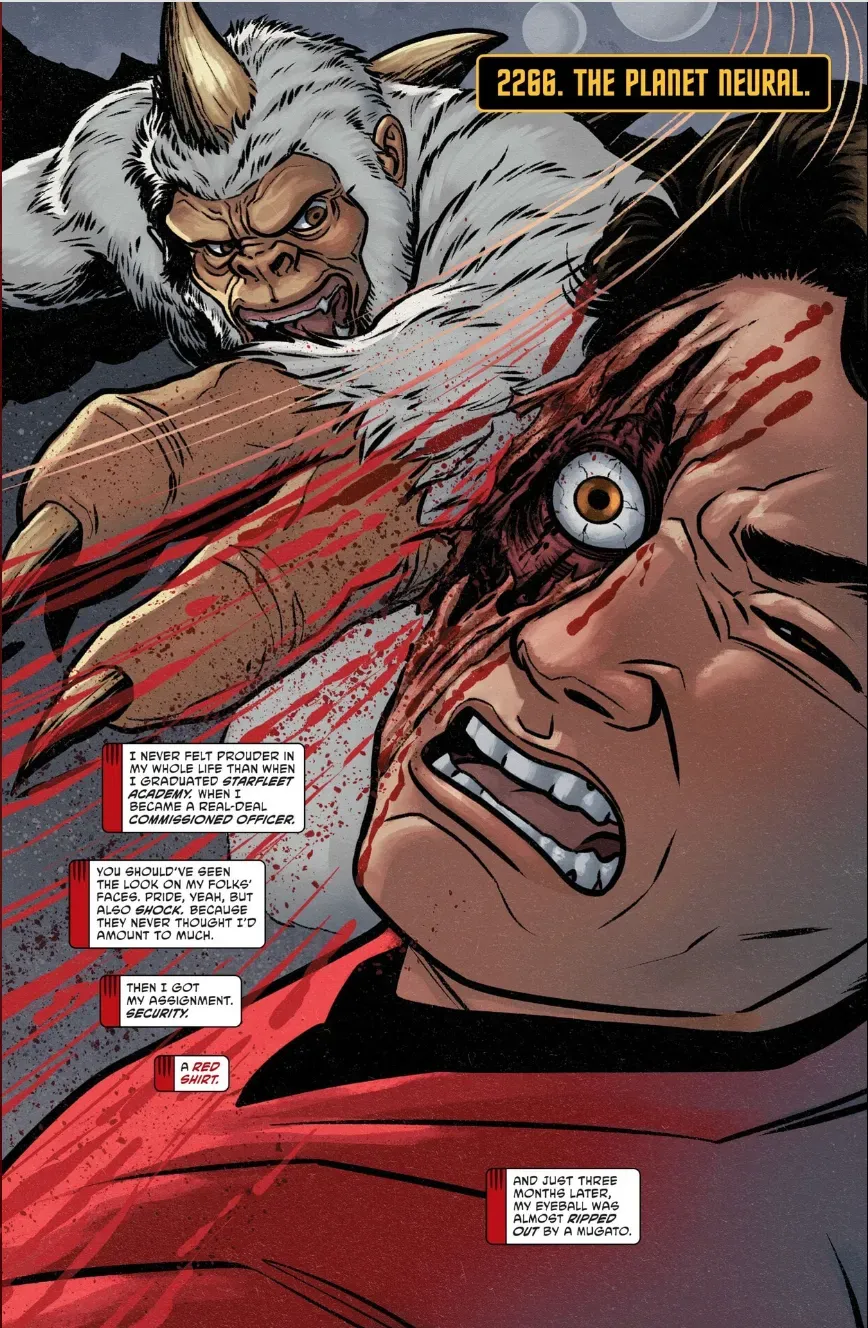
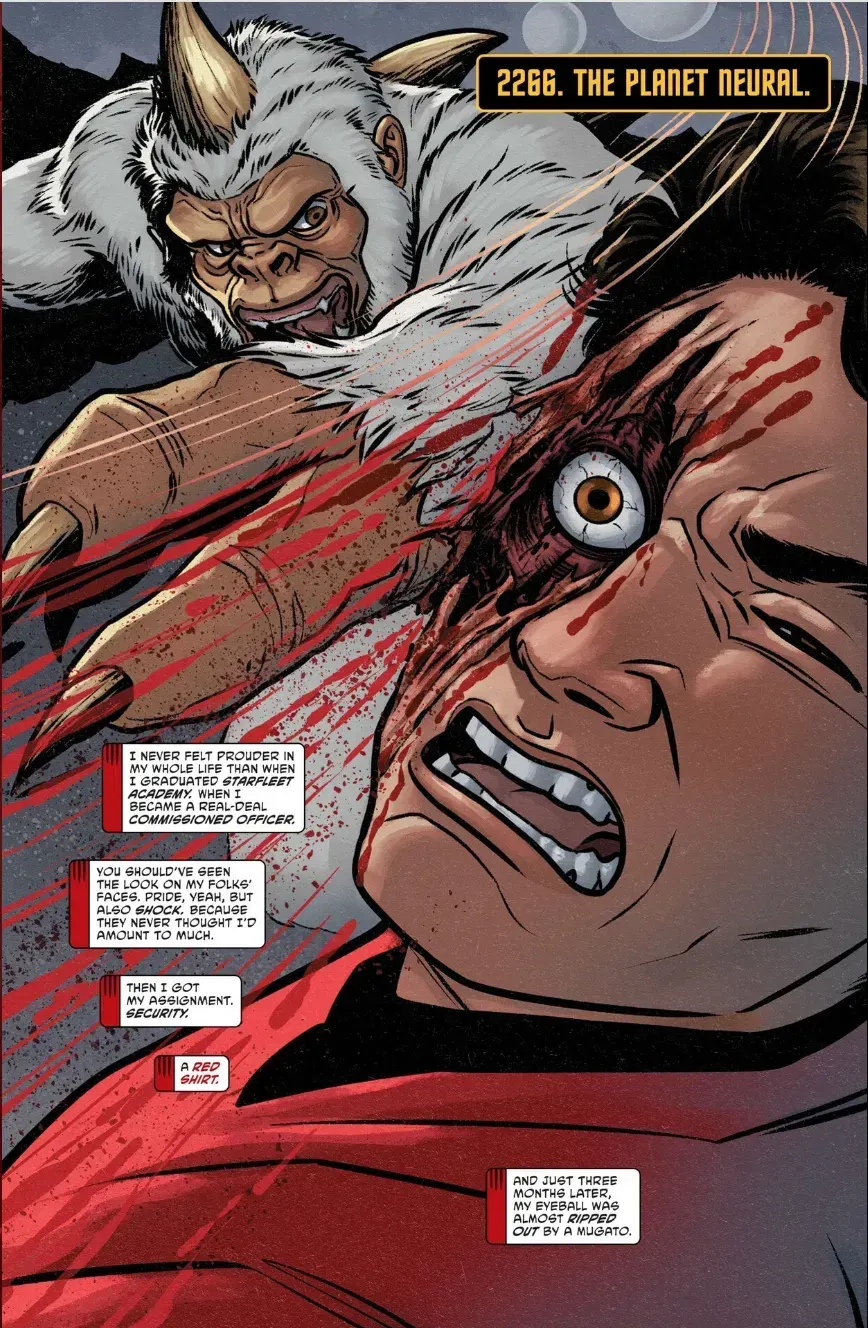
Sci-fi scholar Gerry Canavan has a post, "On the Ideology of the Redshirt," in which he discusses why Star Trek's redshirts can never become self-consciously aware that they are a meme.
this reality cannot be allowed to become an established fact of the storyworld acknowledged by the characters without dangerously destabilizing the entire creative project. Once the redshirts know that they are redshirts, Star Trek ceases to be Star Trek, and it becomes something else entirely—something much more akin to Starship Troopers than a utopian vision of a possible future
He also comments on the high death rate seen on the original series:
The crew complement of the original Enterprise was only around 430 people, meaning at least 12% of the assigned crew was killed over the course of three years (and these are just the ones we know about)—a fact that would surely see Kirk put on trial for severe incompetence, not promoted to admiral. (In comparison, the death rate for US soldiers serving in Vietnam was only around 2-3%).
2️⃣ Panspermia
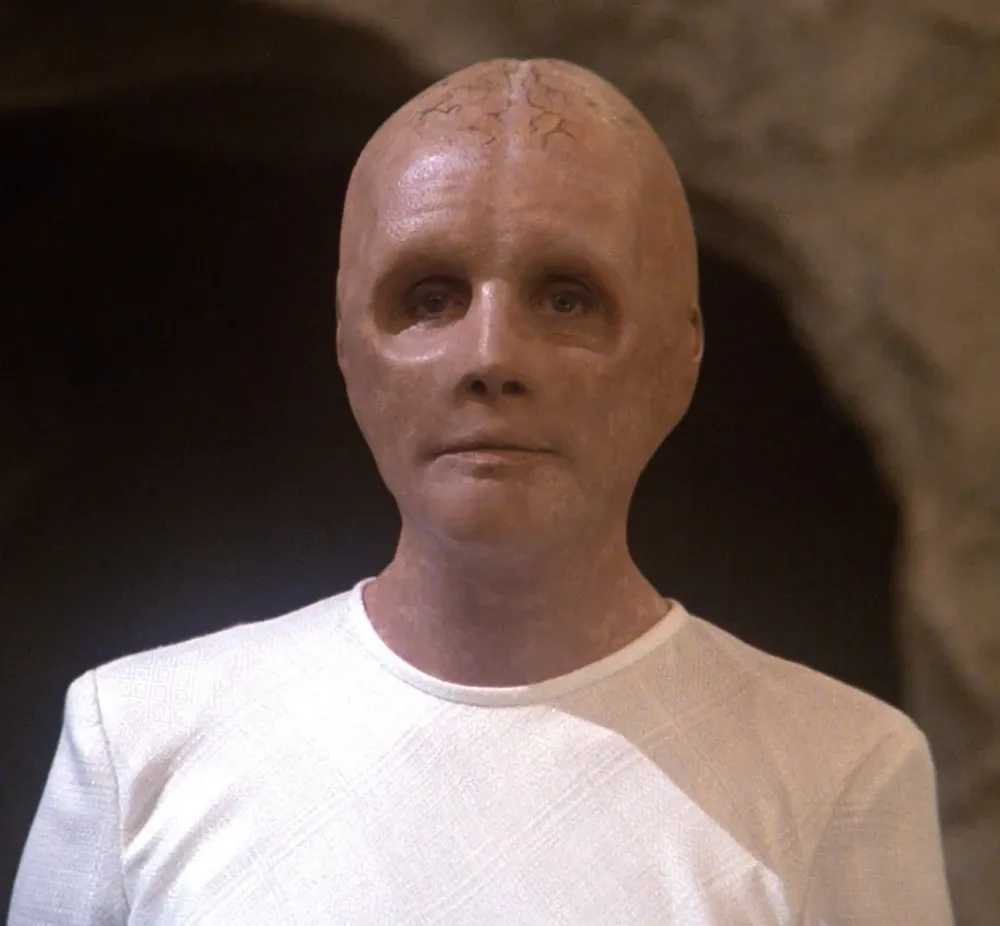
The panspermia hypothesis proposes that "that the seeds of life are ubiquitous in the Universe, that they may have delivered life to Earth, and that they may deliver or have delivered life to other habitable bodies; also the process of such delivery". This explains why almost all of the intelligent life forms found in Star Trek share essentially the same bipedal form:
Based on the ancient humanoid's description, the alien "seeds" co-opted the primitive organisms that were already evolving on many planets, and "directed" their evolution. The implication is that the "seed codes" took over the evolutionary process, allowing the life forms to bypass the forces of natural selection and develop into humanoids in the image of the "seeders".
This is, of course, absurd, but I still enjoyed reading biologist Peggy Kolm's argument about why it is absurd:
Even if we assume that a "seed code" could direct evolution into humanoids, the basic genetic starting material of the original primitive life would have presumably been different on each planet. After millions of years of evolution, there should be remnants of that original genetic code in the genomes of modern species. The more likely alternative would be that the "seed" was the real progenitor of life in our galaxy, simply out-competing the indigenous primitive species. Even so, it's hard to imagine how the resulting humanoids, after millions of years of evolution, would be genetically similar enough to allow human-vulcan, human-klingon, and other interspecies hybrids. It's not even clear that humans can form hybrids with our closest cousins, the chimpanzees, so it's incredibly unlikely that humans could hybridize with species that have a different number of ribs, hearts, lungs and other organs.
3️⃣ Uhura
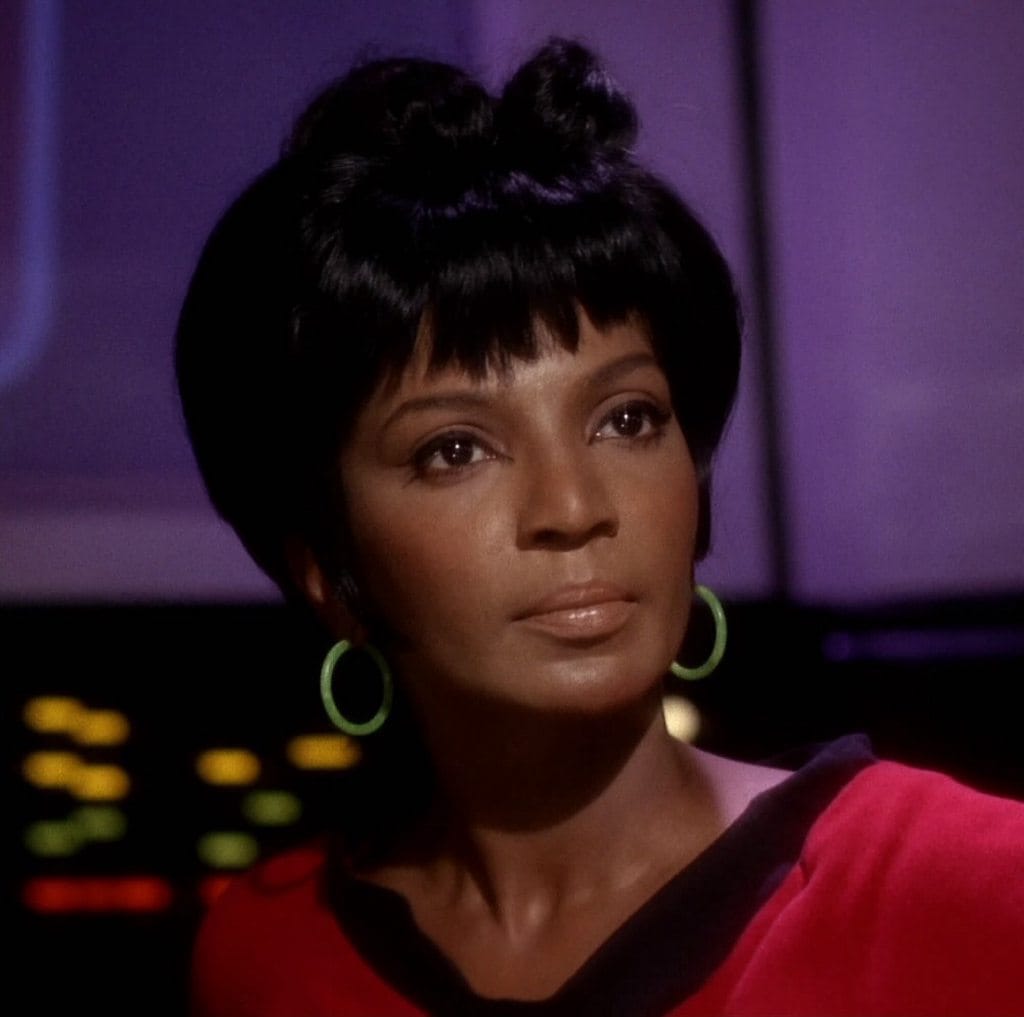
One of my favorite science writers, Chanda Prescod-Weinstein, recently published an excerpt from her book, The Edge of Space-Time: Particles, Poetry, and the Cosmic Dream Boogie, in which she describes how important Nichelle Nichols as Lieutenant Nyota Uhura and other Black characters on Star Trek were to her as a young girl.
Roddenberry had filmed the first Star Trek pilot featuring white actress Majel Barrett (his wife) as second in command of the Enterprise, but NBC hated the idea of portraying a white woman in such a powerful position and refused to pick up the series. The franchise might have died were it not for the intervention of Lucille Ball of I Love Lucy fame, who insisted that Roddenberry be given a second chance. So Roddenberry got rid of the white woman first officer and replaced her with not just any male but a male alien: Leonard Nimoy’s science officer Spock. He also added pilot Hikaru Sulu to the crew, played by Japanese American concentration-camp survivor George Takei. And he cast Nichols, already a star stage performer, in the role of the communications officer whose last name recalls uhuru—Swahili for “freedom.”
Endnote
❤️ Enjoying Triptych? Let your friends know! Encourage them to sign up via the Triptych website. I can't begin tell you how happy it makes me to see even one new subscriber!
💬 Or maybe you'd consider writing a short endorsement for the "kudos" page? You can just email it to me, or fill out this Google form.
💰 Want to ensure the long term sustainability of this newsletter? Consider becoming a sponsor. Sponsorship helps pay for my hosting costs as well as the newspaper and journal subscriptions which, in turn, allow me to provide "gift links" to all subscribers. A big shout-out to my current paid subscribers, you help keep me motivated!
🧧 Don't want to enter into a long term commitment, but still want to support the newsletter? You can always leave a one-time tip if you like.
🦋 Three links not enough for you? Follow me on Bluesky for all the links that don't make it to the newsletter. The newsletter also has its own Bluesky account.
Thank you!
Member discussion