Kerim's Triptych ❧ Radical Cringe, Moral Hazard, Acme Corp
Welcome 👋 to Kerim's Triptych, a free newsletter that delivers three fabulous links to your inbox, two or three times a month. (If you didn't intend to subscribe, or you don't want to receive these anymore, there is an unsubscribe link at the bottom.)
If you enjoy Triptych, please tell a friend about it. Thanks!
1️⃣ Radical Cringe
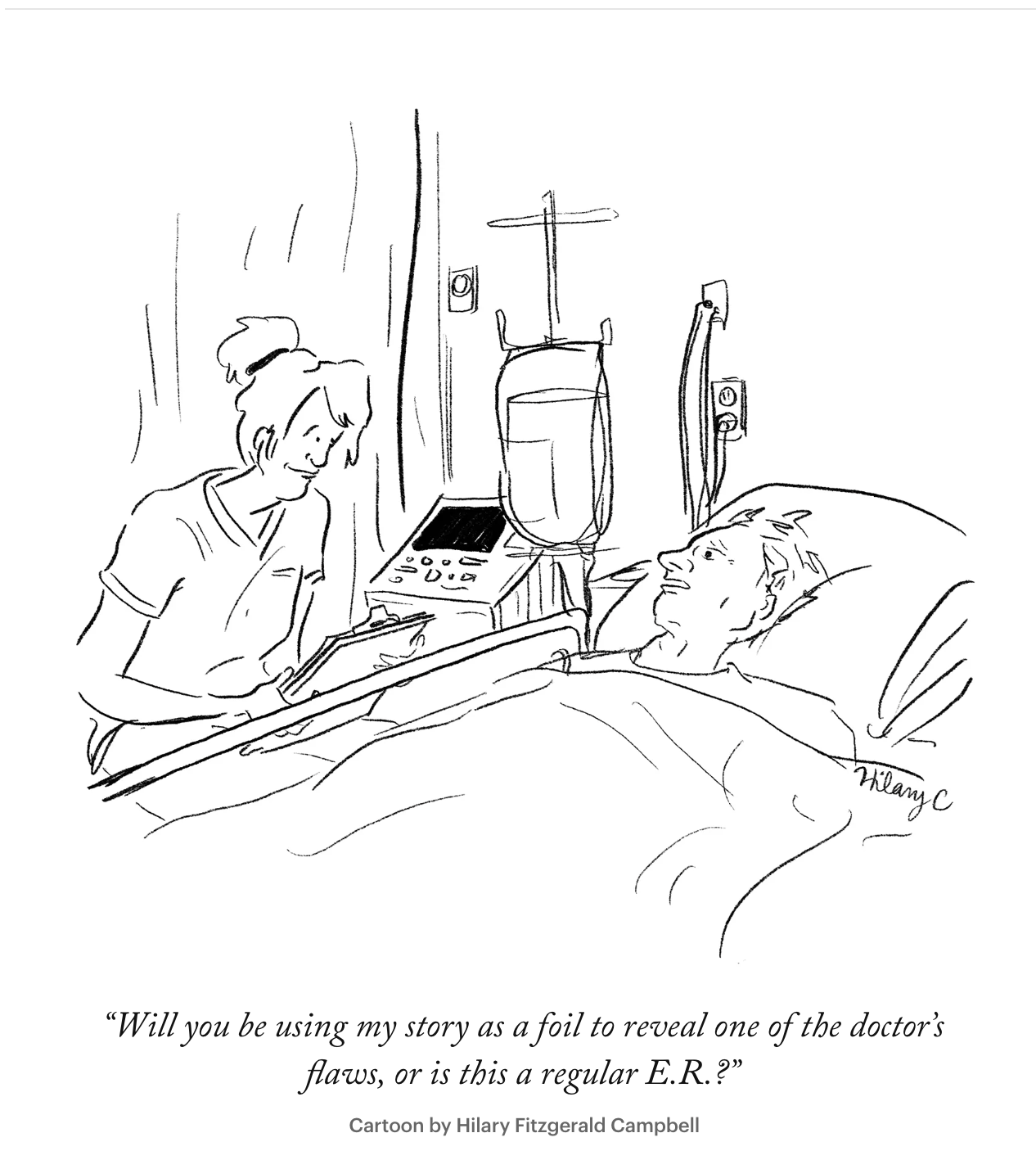
The Pitt, a TV show that takes place entirely in an emergency room, can be a difficult show to watch. For one thing, it shows medical procedures with surgical detail. Nothing is held back from the viewer. (Or at least it gives you that impression by showing audiences more than they are used to seeing while still being careful not to overdo it.) This is not a show for the feint of heart. Secondly, nearly every medical emergency serves to either advance the story of the medical professionals working in the ER, or to teach the audience something about the American medical system. (Often doing both at the same time.) This could easily have made the show feel contrived and pedantic. And sometimes it does, such as when administrative staff comes down to the ER to yell at the physicians about patient satisfaction scores. Still, it succeeds far more often than not, and the reasons it succeeds are worth discussing.
While the acting, writing, and directing are everything we have come to expect from "prestige television," they are still not enough, on their own, to explain the show's success. My theory is that the two factors which make the show difficult to watch, its medical realism and its pedantic bent, serve as counterweights, balancing the show out. The pedantic elements gain a sense of urgency from the medical realism, and the medical realism is made dramatic by the sociological and psychological aspects of the storyline.
Charlotte Rosen, writing in the Los Angeles Review of Books, frames the pedantic element as "wokeness," but comes to a similar conclusion:
There’s no time for purity testing or posturing, The Pitt suggests, when you’re trying to prevent the premature death of working-class people. (Something you can only do, it turns out, with an analysis of capitalism’s racial and gendered manifestations.)
. . . In The Pitt, taking action to combat exclusion and subvert oppressive structures is medical best practice, and central to the doctors’ mandate to “do no harm.” In portraying both the true stakes and practical ease of making emergency medical care truly more inclusive—and, indeed, demonstrating how such awareness improves outcomes for all patients—The Pitt makes a mockery of the Right’s pathetic, transparently racist framing of DEI as itself discriminatory and devaluing.
The Pitt works in much the same way as the most successful street theater performances I've seen in India: by dramatizing social problems. But the details of the medical procedures transforms it into something else. Even as the authors pair the social topics to individual medical cases, those medical cases have a life and logic of their own, meaning that the show's narrative arcs are never entirely predictable from the message the show wants to tell. And, more often than not, the medical story and the socio-political story are one and the same, just as they are in real life.
2️⃣ Moral Hazard
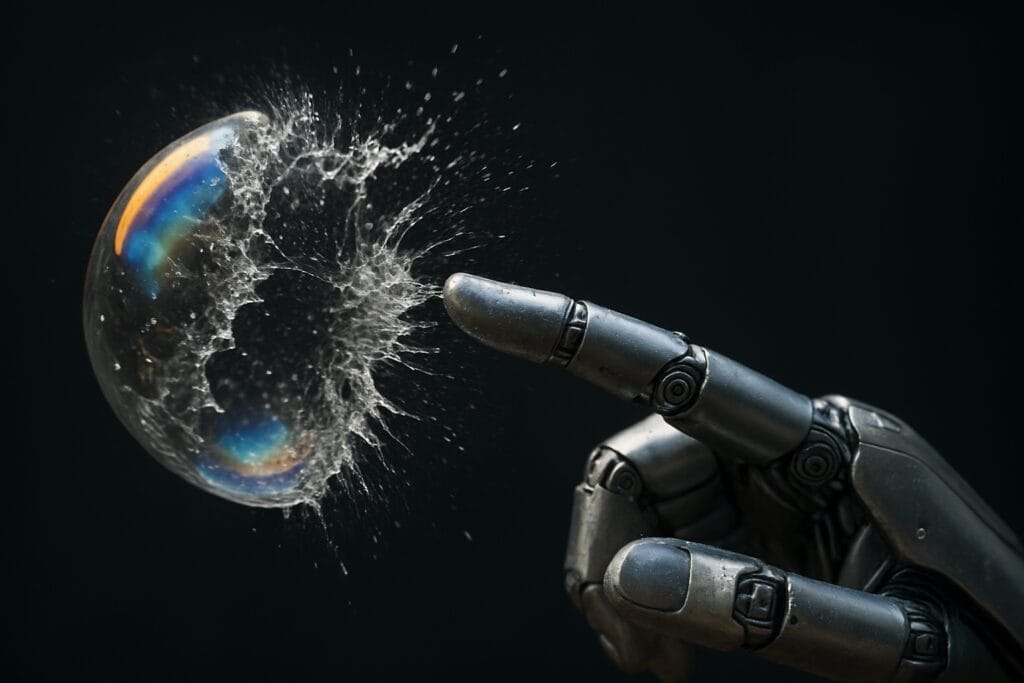
One thing I haven't been able to wrap my mind around since Trump took office is the steady, unfaltering, rise of the stock market. In the face of reckless wars, arbitrary tariffs, and an AI bubble, it seems irrational. Turns out that it is and it isn't.
As Kyla Scanlon explains in the NY Times, it is rational because investors know the government will bail them out, no matter what. Not only has bailing out the stock market been official government policy since the 1980s, but the government is also clearly committed to saving the AI industry if it falters as well.
This redirects moral hazard from “the Fed will bail out the banks” to “the government will bail out A.I.”
At the same time, it is irrational because "A.I. is not at all safe from the risks that markets are ignoring."
For instance:
A.I. is one of the most energy-intensive technologies ever built. In Virginia, where data centers are most concentrated, they already consume 26 percent of the state’s electricity. Nationwide, data centers consumed more than 4 percent of electricity last year, and that’s projected to reach as much as 12 percent by 2028. The technology that markets are counting on to save them is one of the first things to get squeezed if we have a full-blown energy crisis.
This won't let me sleep any easier, but it does help me make some sense of what is going on with the markets.
The article ends with some practical policy suggestions. I like the idea of tying government financial relief to "public equity stakes, so that the public, which is already underwriting much of the risk, also shares in the upside." We would need a complete change in the leadership of both parties before such a thing could happen, but who knows what the future holds?
3️⃣ Acme Corp
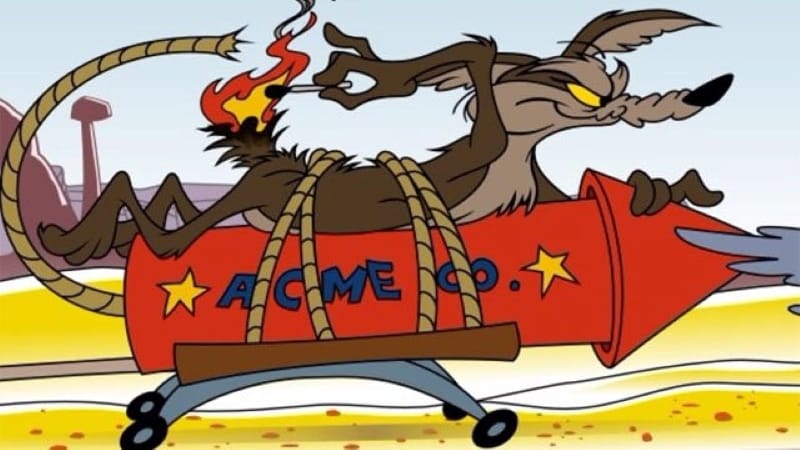
The Warner Bros. movie Coyote vs. Acme came out in 2023 but was shelved so the company could obtain a tax write-off on it. (A common practice. One that has become even more common lately.) Well, it is finally coming to theaters this summer. I don't have high hopes for the film, but the announcement led me to go back and re-read the wonderful 1990 New Yorker piece, by Ian Frazier, that inspired it.
Here is an excerpt of the "Opening Statement of Mr. Harold Schoff, attorney for Mr. Coyote":
Mr. Coyote states that on December 13th he received of Defendant via parcel post one Acme Rocket Sled. The intention of Mr. Coyote was to use the Rocket Sled to aid him in pursuit of his prey. Upon receipt of the Rocket Sled Mr. Coyote removed it from its wooden shipping crate and, sighting his prey in the distance, activated the ignition. As Mr. Coyote gripped the handlebars, the Rocket Sled accelerated with such sudden and precipitate force as to stretch Mr. Coyote’s forelimbs to a length of fifty feet. Subsequently, the rest of Mr. Coyote’s body shot forward with a violent jolt, causing severe strain to his back and neck and placing him unexpectedly astride the Rocket Sled. Disappearing over the horizon at such speed as to leave a diminishing jet trail along its path, the Rocket Sled soon brought Mr. Coyote abreast of his prey. At that moment the animal he was pursuing veered sharply to the right. Mr. Coyote vigorously attempted to follow this maneuver but was unable to, due to poorly designed steering on the Rocket Sled and a faulty or nonexistent braking system. Shortly thereafter, the unchecked progress of the Rocket Sled brought it and Mr. Coyote into collision with the side of a mesa.
Paragraph One of the Report of Attending Physician (Exhibit B), prepared by Dr. Ernest Grosscup, M.D., D.O., details the multiple fractures, contusions, and tissue damage suffered by Mr. Coyote as a result of this collision. Repair of the injuries required a full bandage around the head (excluding the ears), a neck brace, and full or partial casts on all four legs.
Hampered by these injuries, Mr. Coyote was nevertheless obliged to support himself. With this in mind, he purchased of Defendant as an aid to mobility one pair of Acme Rocket Skates. When he attempted to use this product, however, he became involved in an accident remarkably similar to that which occurred with the Rocket Sled. Again, Defendant sold over the counter, without caveat, a product which attached powerful jet engines (in this case, two) to inadequate vehicles, with little or no provision for passenger safety. Encumbered by his heavy casts, Mr. Coyote lost control of the Rocket Skates soon after strapping them on, and collided with a roadside billboard so violently as to leave a hole in the shape of his full silhouette.
Endnote
❤️ Enjoying Triptych? Let your friends know! Encourage them to sign up via the Triptych website. I can't begin tell you how happy it makes me to see even one new subscriber!
💬 Or maybe you'd consider writing a short endorsement for the "kudos" page? You can just email it to me, or fill out this Google form.
💰 Want to ensure the long term sustainability of this newsletter? Consider becoming a sponsor. Sponsorship helps pay for my hosting costs as well as the newspaper and journal subscriptions which, in turn, allow me to provide "gift links" to all subscribers. A big shout-out to my current paid subscribers, you help keep me motivated!
🧧 Don't want to enter into a long term commitment, but still want to support the newsletter? You can always leave a one-time tip if you like.
🦋 Three links not enough for you? Follow me on Bluesky for all the links that don't make it to the newsletter. The newsletter also has its own Bluesky account.
Thank you!
Member discussion