
Kerim's Triptych ❧ Capitalism, Naxalism, Creepy Corpse Corp
Welcome 👋 to Kerim's Triptych, a free newsletter that delivers three fabulous links to your inbox, two or three times a month. (If you didn't intend to subscribe, or you don't want to receive these anymore, there is an unsubscribe link at the bottom.)
If you enjoy Triptych, please tell a friend about it. Thanks!
⚠️ If you are a paying subscriber (THANKS!), please check that your payment method is up-to-date. A number of subscriptions have been cancelled due to expired cards. I don't make any money off of this newsletter, but I would like to be able to cover my costs—including newspaper and magazine subscriptions.
1️⃣ Capitalism's Beginnings
I loved historian Sven Beckert's previous book on the history of cotton. I use it in my classes. So I had high hopes for his new tome, a global history of capitalism. I thought maybe I could update my syllabus with this new text. Unfortunately, I found it unreadable. I gave up reading it after a few chapters.
The book doesn't tell a story so much as bombard the reader with endless lists. I couldn't help but wonder, who is this book for? It isn't aimed at his fellow historians. Even as a non-specialist, I felt I wasn't learning anything new. It seems to be aimed at a general audience, but the length of the book, the endless lists, and the lack of a clear narrative seem unlikely to attract most casual readers.
Fortunately, Corey Robin has read the book so I don't have to. In his lengthy review, he tries to pin down Beckert's arguments, none of which he finds convincing:
Beckert makes three claims. Two look backward, one looks forward, and none of them stands up to scrutiny. First, he writes that these merchants pioneered a new form of economic being. They “led economic lives based upon a truly exotic principle: They deployed capital to produce more capital. The accumulation of capital was the linchpin of their worldly endeavors.” But that principle was neither novel nor exotic, and Beckert’s merchants were not the first to act on it. Aristotle saw it lurking in any form of money-based, long-distance trade, and he was sufficiently concerned about its currency among the merchants of his day that he devoted several pages of his Politics to denouncing it and them.
Second, Beckert claims that these merchants forged a “global connectedness” . . . Beckert regularly toggles between “long-distance trade,” “long-distance merchants,” and “capitalist,” and writes that “capitalism’s mainspring was its capacity to connect distant places.” But this also was not new: Ancient trading routes in the Mediterranean and the Black Sea spanned distances that were equivalent to those separating Javanese merchants from the Banda Islands or Khmer merchants from China, two instances of global connectedness that Beckert cites . . .
Last, though Beckert is careful to say that these merchants were “capitalists without capitalism,” he insists that they built “islands of capital” upon which “capitalism originated.” Beckert’s merchants were the “vanguard,” the “avant-garde,” the “central actors,” “seedlings,” “sprouts,” and “harbingers” of the “capitalist revolution” to come. As the slippage from vanguard to harbinger suggests, Beckert never settles on, much less sustains, a specific historical claim about these merchants, whose “revolutionary importance,” he allows, may be “visible only in retrospect.”
I am more sympathetic to some of these's arguments than Robin is, but it seems that they will need a better champion than Beckert. I do, however, have to take issue with one aspect of Robin's review:
Like his merchants, Beckert is a wonderful maker of lists; each item pops off the page.
No, the lists did not pop off the page. They put me to sleep.
2️⃣ Naxalism's End
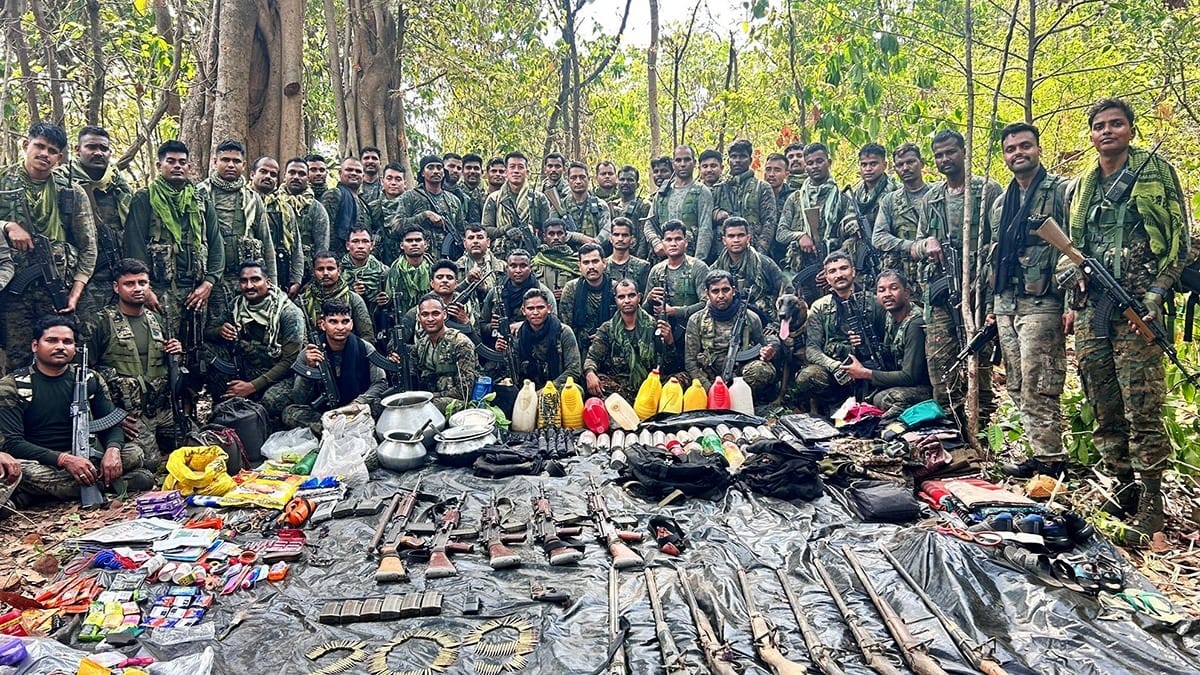
For decades, Indians have been waging a civil-war over control of its central forest regions. These are largely inhabited by Indigenous peoples, or Adivasis. I teach a course introducing Adivasis to our Indigenous Taiwanese students, and so I need to stay on top of the latest developments in this war.
It was the result of a Maoist insurgency which began in the city of Naxalbari in 1967, which is why the Maoists are called "Naxalites" or "Naxals." Throughout the war, Adivasis have been caught in the middle, between the Naxals on the one hand and government forces on the other, with neither side allowing them to stay neutral.
I have tried to follow this story, but it has been difficult. Scholars who study the region, like Nandini Sundar, have described a campaign of harassment that made it difficult to pursue research. Still, there have been a number of in-depth reports, including a rather hagiographic one by Arundhati Roy which came out some years ago.
I was surprised, however, to learn last year that the war is now over, the Naxals having surrendered. What happened? I haven't been able to get any good information, until now when Shashwati pointed me to this detailed report from Shubhranshu Choudhary, who has been working to train citizen journalists in the region.
The real story, though, begins on January 16, 2024.
By then, the BJP had formed the government in Chhattisgarh, and the camp-establishment strategy, already accelerated under Amit Shah as Home Minister, was in full swing. To counter it, the Maoists ordered fighters from West and South Bastar to converge on a single target: the CRPF’s Cobra Battalion, stationed at Dharmavaram in Bijapur district.
The planning was meticulous. A mock-up of the Cobra camp was constructed along the banks of the Talperu River. Fighters were fitted with grass camouflage. Extensive reconnaissance was conducted. And yet the attack failed completely. The Maoists issued a press statement claiming 35 security personnel were killed. In reality, not one died.
The reason for the failure was significant: the local population did not, or could not, participate in large numbers, as they had in every previous major attack.
But the failed assault produced an unintended consequence. For the first time in a long while, key tribal Maoist commanders had gathered in one place. In reviewing what had gone wrong, they crossed a threshold that had never been crossed in 45 years of the movement in Dandakaranya: every tribal Maoist leader in that room said aloud, to one another, what they had privately believed for years. Society wanted them to change course. Society wanted them to lay down their arms.
They drafted a letter to the Central Committee, the supreme body of the Maoist party. It read, in effect: The security camps are making it impossible to meet with people or maintain their support. The party must change its strategy. We should temporarily lay down our arms.
That letter was rejected, but something had changed forever.
What destroyed the Maoist movement in central India was not, in the end, drones or satellites or superior firepower, though these played their part. It was the withdrawal of the one thing that had made the movement possible in the first place: the quiet, durable consent of the Adivasi communities it claimed to represent.
I hope that the peace means they can rebuild their lives and not simply that these regions will now be wide open for developers and mining operations. I'm not optimistic.
3️⃣ Creepy Corpse Corp
I'm not someone who listens to a lot of electronic music, but I do love anime, and one of my favorite anime directors was the late Satoshi Kon. So I really loved this Satoshi Kon-inspired music video from Creepy Corps Corp. Enjoy.
Endnote
❤️ Enjoying Triptych? Let your friends know! Encourage them to sign up via the Triptych website. I can't begin tell you how happy it makes me to see even one new subscriber!
💬 Or maybe you'd consider writing a short endorsement for the "kudos" page? You can just email it to me, or fill out this Google form.
💰 Want to ensure the long term sustainability of this newsletter? Consider becoming a sponsor. Sponsorship helps pay for my hosting costs as well as the newspaper and journal subscriptions which, in turn, allow me to provide "gift links" to all subscribers. A big shout-out to my current paid subscribers, you help keep me motivated!
🧧 Don't want to enter into a long term commitment, but still want to support the newsletter? You can always leave a one-time tip if you like.
🦋 Three links not enough for you? Follow me on Bluesky for all the links that don't make it to the newsletter. The newsletter also has its own Bluesky account.
Thank you!
Member discussion