Kerim's Triptych for Sunday December 1st, 2024
Welcome 👋 to Kerim's Triptych, a free newsletter that delivers three fabulous links to your inbox, two or three times a month. (If you didn't intend to subscribe, or you don't want to receive these anymore, there is an unsubscribe link at the bottom.)
One of my goals for 2024 was to watch less TV and to see more films instead. My goal was to watch at least one film a week, like I used to before the age of streaming TV. To that end I subscribed for both Criterion Collection and MUBI, and cancelled a bunch of streaming subscriptions. Unfortunately, it didn't quite work out as I had hoped. I did watch at least two films a month, which is more than the year before, but at the end of a long day of teaching it is hard to summon up the energy and concentration to watch classic art films. I guess Netflix exists for a reason? Still, I got to see some truly amazing films, and here are three of my favorites. If you would like more film reviews from me, consider following me on Letterboxd.
1️⃣ Zone of Interest
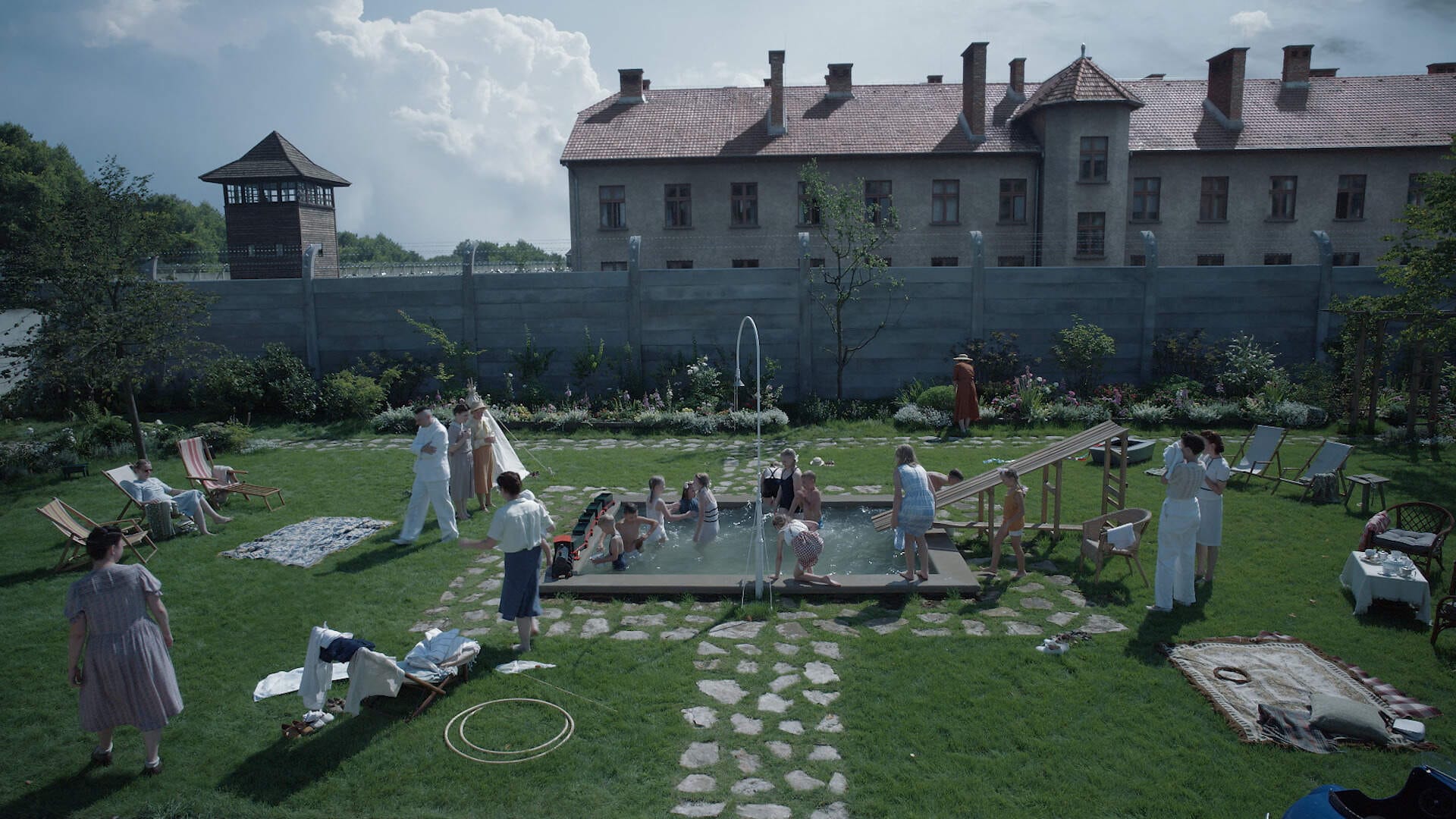
Sound design is central to what made Jonathan Glazer's 2023 film so effective. This is, in large part, due to the work of his sound designer and sound editor, Johnnie Burn. The main couple live in a beautiful house with a large garden that abuts the outer wall of Auschwitz. Apart from the father, who is the commandant, the rest of the family (and the audience) never sees what is going on inside in the camp. But they hear it.
How do you convey the sound of genocide without overwhelming the film to the point that you can't even tell a story? The secret was extensive historical research. From an interview with Johnnie Burn by Jason Struss (in DigtialTrends):
I must confess that doing the research really wasn’t enjoyable. To gather the sounds that we needed, I knew that credibility was important. The year before the shoot was devoted to research, like reading lots of books about Auschwitz and understanding everything about the correct types of vehicles and types of guns that were used at the camp. That allowed us to get certain sounds that were as accurate as possible like recording a gun being shot at the correct distance and things like that.
A lot of my research involved reading witness testimony. I had a 600-page document of events that happened and testimony from survivors and guards. We used that to go about recording what we could and recreating specific events that we read about and were told about. And from that, I created a sound library for the film. So I had many, many hours of different types of sounds like painful human sounds, sounds of crematoriums, sounds of industrial furnaces, and sounds of the manufacturing machinery that the camp possessed and the prisoners had to operate.
Well, we didn’t want to make a salacious movie that peddled any form of exaggerated or false dramatization. We tried to scientifically reproduce with as much faithfulness as possible about what we knew happened at that place and time.
We were very truthful about depicting how many deaths would happen daily and how many gunshots you would hear. The rate of death there was staggering, so in terms of what we depicted, I think we kind of underplayed it. But certainly, the whole way through the process, we were horribly aware of our responsibility not to overelaborate or to shock people just for the sake of shocking them. There was a long process of removing sounds or anything we thought was too much or unnecessary.
2️⃣ Suzhou River
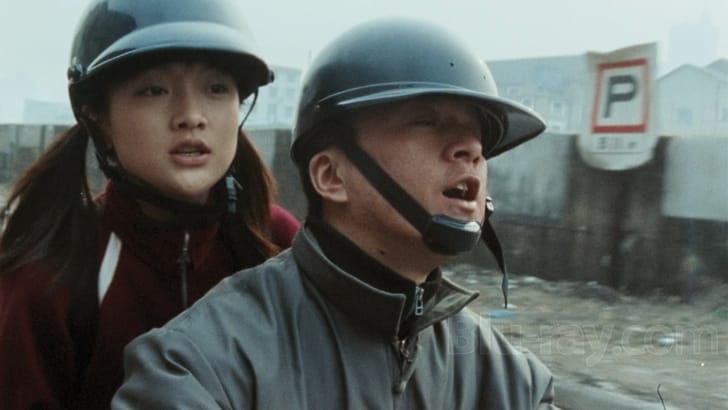
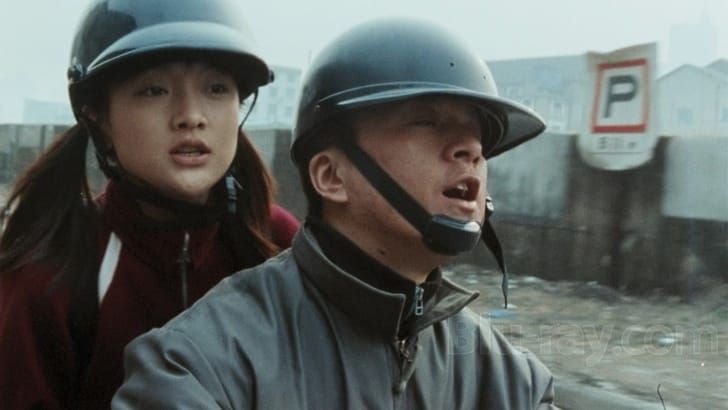
One might be tempted to describe this film as "Vertigo meets Breathless," but that wouldn't do justice to Lou Ye's film (from 2000) which is, in part, a comment on the process of storytelling itself. When the film starts we hear the narrator (whom we never see) talking about his former girlfriend, Mei-Mei, who performs as a mermaid in a giant water tank at a Shanghai nightclub. This initial story is a beautifully told romantic tale that makes one think of Wong Kar-wai. But that version of the narrative begins to break down about half way through the film, as the characters in his narrative, a motorcycle driver named Madar and his girlfriend Moudan, take over. Madar and Moudan replace and challenge the roles of the narrator and Mei-mei in the first part of the film.
In his analysis of the film, Jorge Alcocer explains how these stories collide:
At this point the lines between reality and imagination are starting to blur, as the narrator’s world, which we have perceived as reality, and Madar’s world, which we have perceived to be mostly fictional, are starting to collide and overlap with one another. In certain scenes, we see Madar assuming the 1st person point of view similar to our narrator’s point of view and we occasionally see them interacting within these scenes. Both characters share similar experiences as we see the narrator searching for Mei Mei within the crowds of Shanghai during her disappearances, and Madar who is searching for his lost lover Moudan. The narrator and Moudan are beginning to share similar points of views in the narrative, prompting us to question what is imagination and what is reality.
However, when Mei Mei begins to interact with Madar, Madar believes that Mei Mei is Moudan. Mei Mei and Moudan are almost exactly identical, different only in how they’re dressed and how they act (both characters are in fact played by the same actress Zhou Xun). Mei Mei at first pushes away Madar and rejects his idea that she is Moudan and doesn’t really believe Madar and Moudan’s story much less her own role within that story as a replacement for Moudan. In that sense, Mei Mei rejects the idea of such a romantic and almost fantastical love story, believing it to be fictional.
It sounds confusing, I know, but in Lou Ye's hands it hardly matters which version of the story we are watching. You just get caught up in the narrative and the cinematography. It is only after you've watched the film that you start to find yourself trying to go back and trying to sort out the different narratives. As a result, it is a film that sticks with you for a while and almost demands a second viewing.
3️⃣ Anatomy of a Fall
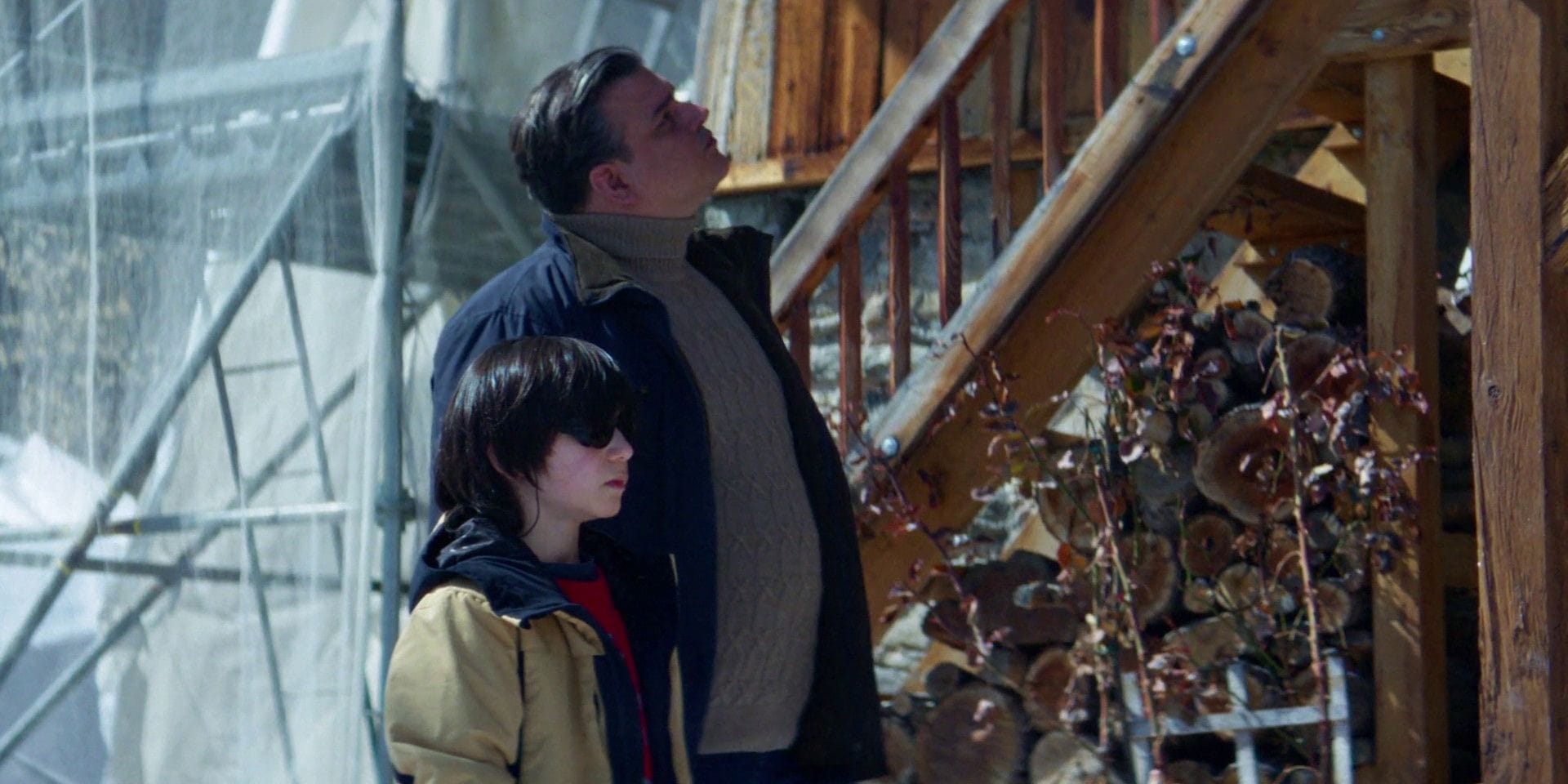
Anatomy of a Fall (2023), by Justine Triet, although stylistically miles apart from Souzhou River, is also a film about the stories we tell about the past and the power of narrative to shape our lives. And like Souzhou River, it a character who, until then, seems to only be a passive figure in the story gains narrative agency to reshape the story.
The film revolves around a death of a man who fell out a window. Or was he pushed? The victim's wife is the main suspect in a murder trial, and her son must testify. As a result the court sends someone to live with them in order to make sure that nobody can influence the boy's testimony.
Like Zone of Interest, it is also a film where sound design plays a key role, as Robert Koehler explains in his review (from Cineaste):
Novelist and student are interrupted by the sound of a Calypso version of 50 Cent’s rap song, “P.I.M.P.”, blaring from upstairs. We learn later that this is being played by Voyter’s husband, Samuel (Samuel Theis), a French-born teacher and frustrated novelist who feels oppressed by trying to work in Voyter’s shadow. To our ears, the act is rude, even violent, intended to stop the women from talking. This is the first of many examples in the movie of sound revealing states of mind, and of perceptions which may or may not be correct—such as a critical case later of the couple’s visually impaired son, Daniel (Milo Machado Graner), insisting to police that he heard his parents talking calmly as he was leaving for a walk with beloved family dog Snoop (enacted by the extraordinary canine, Messi), when it later turns out that he was confused about where he was and what he heard.
Snoop was great too, but I had to stop watching the film at one point because I can't stand it when film dogs are put in jeopardy . . .
Endnote
❤️ Enjoying Triptych? Let your friends know! Encourage them to sign up via the Triptych website. I can't begin tell you how happy it makes me to see even one new subscriber . . .
💬 Or maybe you'd consider writing a short endorsement for the "kudos" page? You can just email it to me, or fill out this Google form.
💰 Want to ensure the long term sustainability of this newsletter? Consider becoming a sponsor. A big shout-out to my current paid subscribers. Their contributions keep this place running — and help keep me motivated.
🧧 Don't want to enter into a long term commitment, but still want to support the newsletter? You can always leave a one-time tip if you like.
🦋 Three links not enough for you? Follow me on Bluesky for all the links that don't make it to the newsletter. The newsletter also has its own Bluesky account.
Thank you!
Member discussion