Kerim's Triptych ❧ Eugenics Laws, Rude Notes, Peter Putnam
Welcome 👋 to Kerim's Triptych, a free newsletter that delivers three fabulous links to your inbox, two or three times a month. (If you didn't intend to subscribe, or you don't want to receive these anymore, there is an unsubscribe link at the bottom.)
As I prepared to send out this week's newsletter, Trump decided to bomb Iran. It feels a bit strange remaining silent about this momentous event, but my newsletter is about taking the time necessary for deeper reflection on issues, not instant takes. There are other newsletters out there for those who want timely reactions to breaking news . . .
1️⃣ Eugenics Health and Protection Law
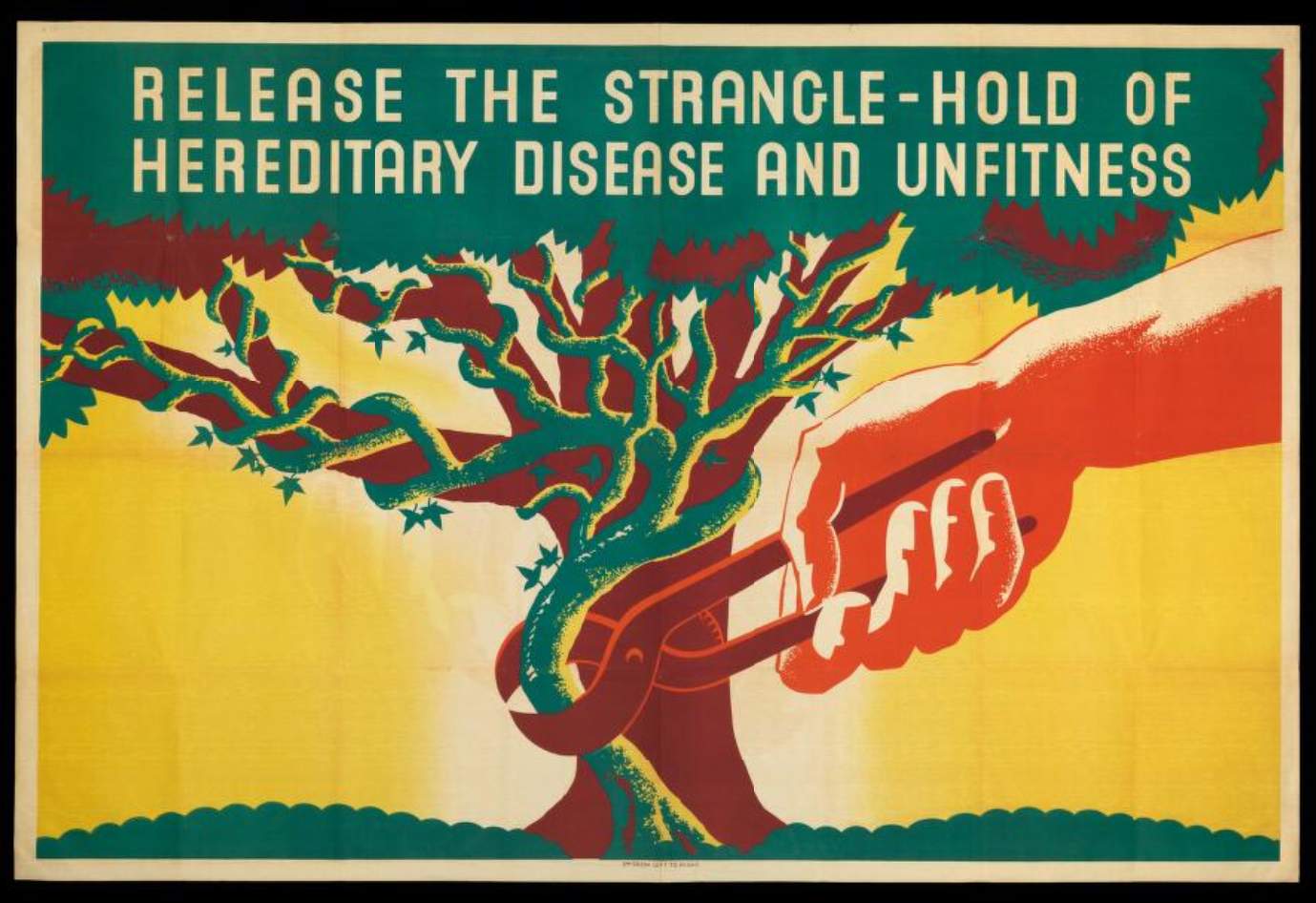
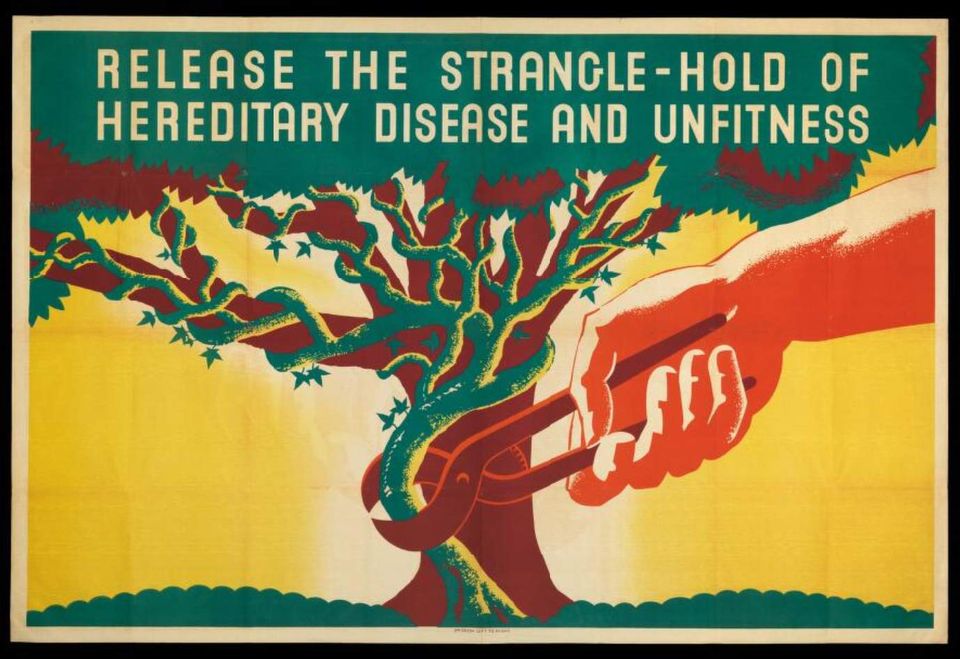
Even though I was a bit shocked to learn that the 1989 law governing abortions in Taiwan was called the "Eugenics and Health Protection Law" 優生保健法, I was not surprised to learn that only the English was changed in 2009, not the Chinese, which remains the same. In English it is now known as the "Genetic Health Act." It isn't uncommon in Taiwan to have an offensive term in Chinese made more appealing by changing the English translation, leaving the Chinese as it is. For many years, this was the case with "Darkie Toothpaste," which changed its name to "Darlie" in 1989, but left the Chinese 黑人牙膏 (literally "Black Person Toothpaste") unchanged until 2021.
But even the new English name of the Genetic Health Act reveals the underlying logic of abortion law in Taiwan which, originally promulgated in 1969, is more about protecting the gene pool than it is about women's rights. I learned this from an excellent report by Hope Ngo that was just published by the Global Taiwan Institute. Ngo's report goes into the many contradictions and shortcomings of Taiwan's abortion laws. In particular, even though it is fairly easy to get a safe abortion at a Taiwanese hospital, there are still many outdated laws on the books making it seem like it is illegal, when it is not.
The presence of laws restricting abortion in the Criminal Code also does not sit well with lawyer and abortion rights activist Audrey Lu (陸詩薇), who explained that the law sends a very disturbing message to women. In my conversation with Lu for International Community Radio Taipei, the women’s rights lawyer surmised that while the law might have been intended to protect the rights of the fetus and the pregnant woman, the message conveyed by the MOJ is that abortion is a crime. Instead of passing amendments, Lu pointed out that the Ministry of Justice should have decriminalized abortion altogether: “These abortion related laws, are very seldom used these days… so what is the whole point [of their existence]?”
Moreover, if the government's primary concern in allowing abortion was once the population's gene pool, today the declining birth rate is linked to national security concerns. Limiting abortion won't help that, Lu said:
“One key issue that lawmakers and policymakers need to understand is that for many women in Taiwan today, it is almost a consensus that marriage—especially after having children—leads to a decline in their quality of life,” she said. “This is largely due to deep-rooted social and cultural expectations that place the burden of caring for not only children but also husbands and even in-laws primarily on women. This fundamental issue is why more and more women choose not to have children.”
2️⃣ Rude Notes on Writing

I enjoyed Adam Mastroianni's "28 slightly rude notes on writing." Partially because I've embarked on a quest to learn more about the craft of writing (expect to see more on the topic in the months ahead), and partially because it is a fun essay.
Here is a taste:
All writing about despair is ultimately insincere. Putting fingers to keys or pen to paper is secretly an act of hope, however faint—hope that someone will read your words, hope that someone will understand. Someone who truly feels despair wouldn’t bother to tell anyone about it because they wouldn’t expect it to do anything. All text produced in despair, then, is ultimately subtext. It shouts “All is lost!” but it whispers “Please find me.”
Also:
What if a great piece of art is like a pearl: an irritant covered in a million attempts to make it go away?
3️⃣ Finding Peter Putnam
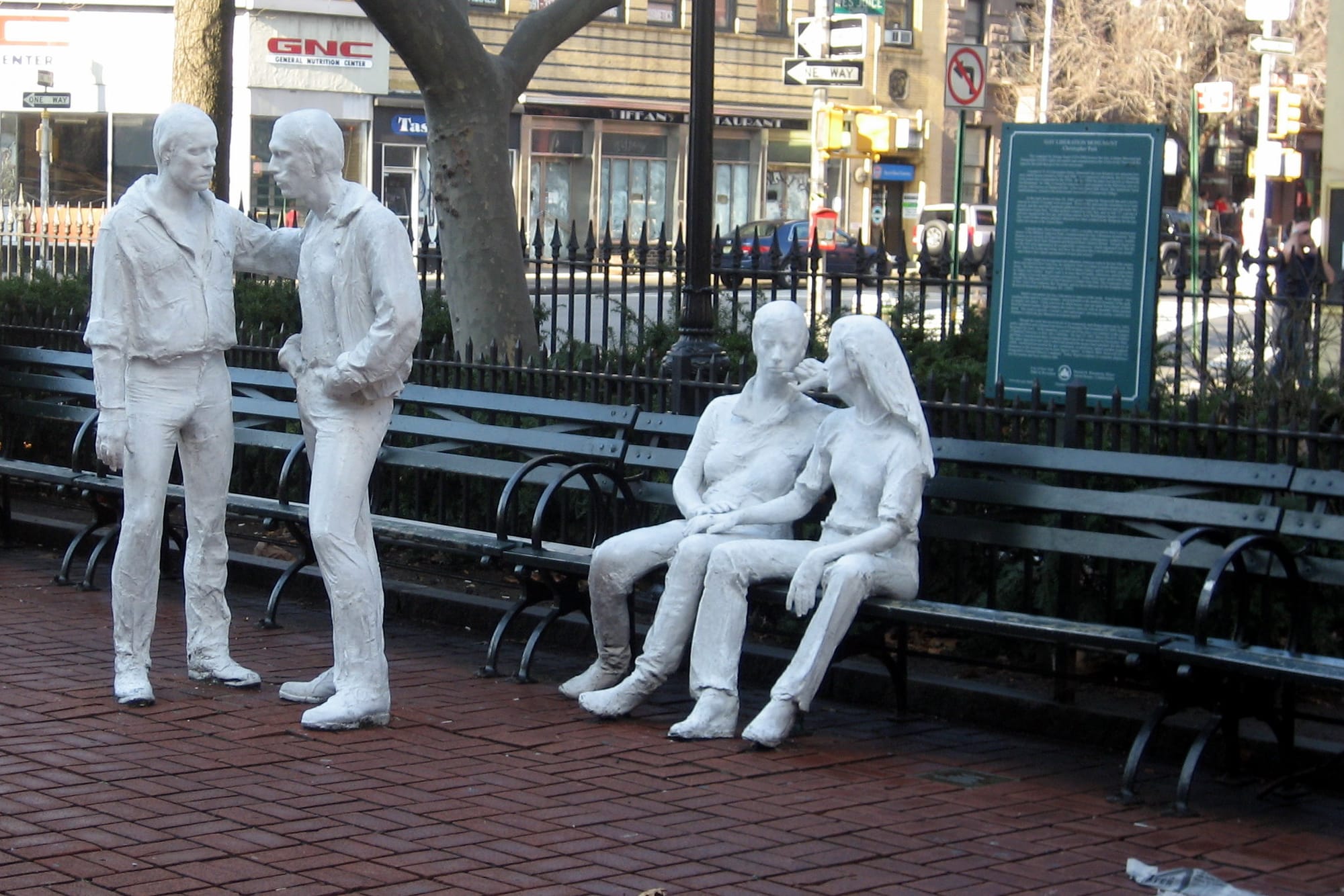
Normally my third item is simply an artwork, not another long article, but the reason I'm sharing this photo of George Segal's sculpture, Gay Liberation, is because of an excellent piece of longform journalism. Amanda Gefter spent more than a decade on the path of the physicist Peter Putnum who, it turns out, paid for the sculpture to be made.
In New York City’s West Village, in a sliver of greenery known as Christopher Park, across from the Stonewall Inn, where 1969 riots sparked the beginning of the gay rights movement in the United States, is a sculpture of four figures by George Segal. Two men, standing, appear deep in conversation, one’s arm wrapped around the other’s shoulder; two women sit side by side on a bench, one’s hand on the other’s knee. When Putnam commissioned the piece, he stipulated that the work “had to be loving and caring, and show the affection that is the hallmark of gay people … and it had to have equal representation of men and women.” When it was installed, the media called it the “first monument to homosexuals in the United States.”
It is a moving and tragic story. Well, it is is tragic that Putnam never published his research, but he seems to have found other forms of meaning in his life, such as with his love of sculpture, and in his life-long relationship with his partner John “Claude” DeBrew.
I won't give away the whole story, but here is the setup. It will surely leave you wanting to know more.
The 60-year-old man lying on the street, as far as anyone knew, was just a janitor hit by a drunk driver. There was no mention of it on the local news, no obituary in the morning paper. His name might have been Anonymous. But it wasn’t.
His name was Peter Putnam. He was a physicist who’d hung out with Albert Einstein, John Archibald Wheeler, and Niels Bohr, and two blocks from the crash, in his run-down apartment, where his partner, Claude, was startled by a screech, were thousands of typed pages containing a groundbreaking new theory of the mind.
“Only two or three times in my life have I met thinkers with insights so far reaching, a breadth of vision so great, and a mind so keen as Putnam’s,” Wheeler said in 1991. And Wheeler, who coined the terms “black hole” and “wormhole,” had worked alongside some of the greatest minds in science.
Robert Works Fuller, a physicist and former president of Oberlin College, who worked closely with Putnam in the 1960s, told me in 2012, “Putnam really should be regarded as one of the great philosophers of the 20th century. Yet he’s completely unknown.”
That word—unknown—it came to haunt me as I spent the next 12 years trying to find out why.
Endnote
❤️ Enjoying Triptych? Let your friends know! Encourage them to sign up via the Triptych website. I can't begin tell you how happy it makes me to see even one new subscriber!
💬 Or maybe you'd consider writing a short endorsement for the "kudos" page? You can just email it to me, or fill out this Google form.
💰 Want to ensure the long term sustainability of this newsletter? Consider becoming a sponsor. Sponsorship helps pay for my hosting costs as well as the newspaper and journal subscriptions which, in turn, allow me to provide "gift links" to all subscribers. A big shout-out to my current paid subscribers, you help keep me motivated!
🧧 Don't want to enter into a long term commitment, but still want to support the newsletter? You can always leave a one-time tip if you like.
🦋 Three links not enough for you? Follow me on Bluesky for all the links that don't make it to the newsletter. The newsletter also has its own Bluesky account.
Thank you!
Member discussion