Kerim's Triptych ❧ The Goldbergs, Russian Short Stories, Aqua
Welcome 👋 to Kerim's Triptych, a free newsletter that delivers three fabulous links to your inbox, two or three times a month. (If you didn't intend to subscribe, or you don't want to receive these anymore, there is an unsubscribe link at the bottom.)
1️⃣ The Goldbergs
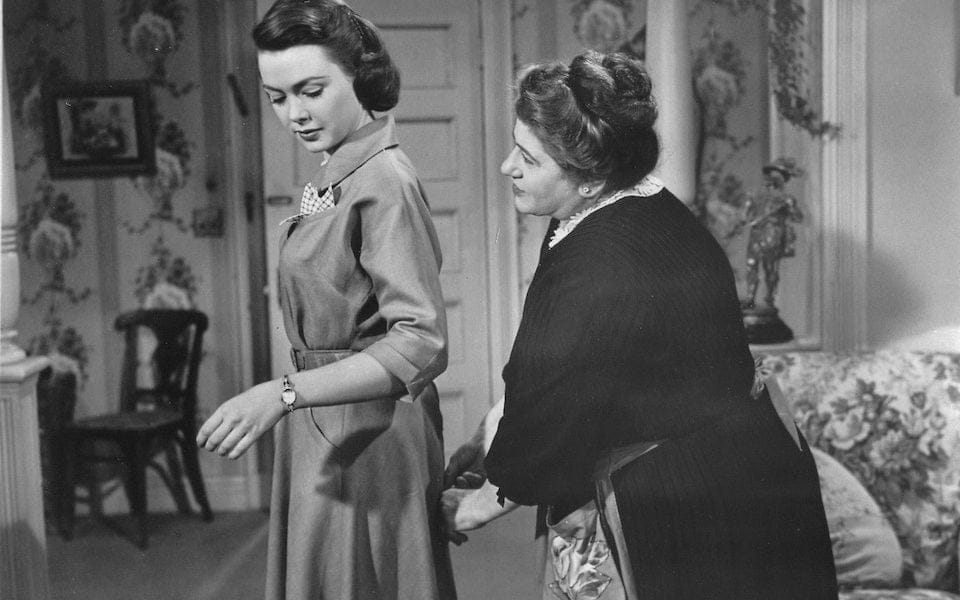
Before reading Emily Nussbaum's recent article about the show in The New Yorker, I had never heard of "The Goldbergs," a pioneering comedy series that first ran on the radio from 1929 to 1946 and then helped establish the TV sitcom as a genre when it ran on CBS from 1949 to 1956. When it ended it was replaced by "I Love Lucy."
The Goldbergs is notable for two reasons. First, because Molly Goldberg, played by Gertrude Berg (the show's writer and creator), was one of the first Jewish main characters on prime-time television. There wouldn't be another one until the character of Rhoda Morgenstern on "The Mary Tyler Moore Show" in the 1970s. And, second, because CBS cancelled the show due to McCarthyism and the House Un-American Activities Committee. Philip Loeb, who played the husband, Jake Goldberg, had been blacklisted, but Gertrude Berg refused to fire him.
The show was far to the left of what would be acceptable on today's TV:
Only a handful of these early episodes still exist, preserved on kinescope, created by filming a TV screen. In one, which aired in September, 1949, the Goldbergs get a new, neglectful landlord. As Molly and Jake argue about the best way to confront the problem, Jake—in high dudgeon, waving his finger like a baton—makes the case for a rent strike, tearing up his rent check and calling for a building-wide protest.
Nor was the show's politics limited to the scripts:
The show’s focus on workers’ rights extended behind the scenes: Berg hired left-wing firebrands like Burl Ives and Garson Kanin as guest stars, and she crossed the color line on both radio and TV, hiring the Black actress and civil-rights activist Fredi Washington. In 1950, “The Goldbergs” also helped lead a technician’s strike, forcing CBS to substitute other programming.
Still, after the show was kicked off CBS, and another network refused to take it on, she finally decided to let Loeb go.
Loeb got a generous deal, ninety per cent of his salary for the run of the show—money he desperately needed, as the sole support of a schizophrenic son who lived in a mental institution. He released a statement that let Berg off the hook; in response, she released a supportive statement saying that she had never believed he was a Communist. Still, it was a painful split. Loeb, unable to work, living with the family of his friend and fellow blacklist victim Zero Mostel, sank into despondency. In 1955, he checked into the Taft Hotel and took an overdose of pills, killing himself.
2️⃣ Russian Short Stories
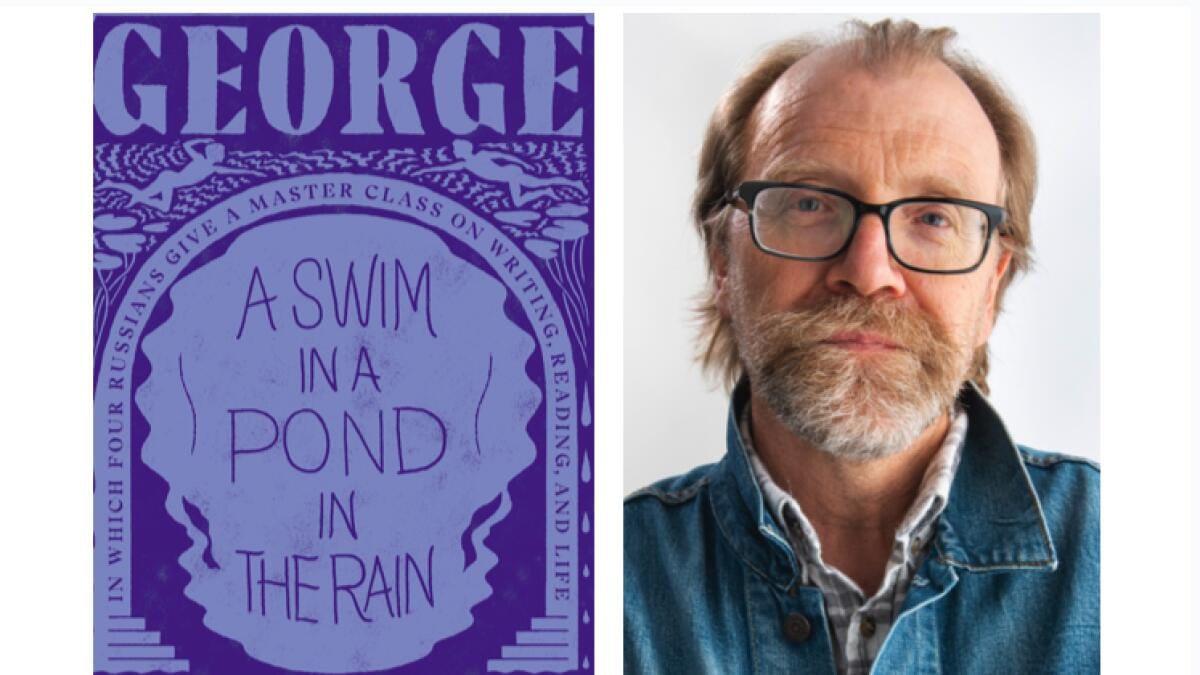
As part of my ongoing exploration of the craft of writing, I recently read A Swim in a Pond in the Rain: In Which Four Russians Give a Master Class on Writing, Reading, and Life, by George Saunders. Adapted from a college course taught by Saunders, it consists of seven short stories by Russian masters (Chekhov, Turgenev, Tolstoy, and Gogol), followed by his lectures on the inner workings of those stories. In the audiobook the stories are read by celebrities like Phylicia Rashad and Glenn Close, while Saunders reads his own words.
The book would be worth reading for the short stories alone, but I enjoyed Sauders' discussions just as much. True, some of his discussions feel too narrow, too focused on a particularly aspect of the writing, to do justice to the subject, but other discussions felt like revelations, elevating the story by highlighting the craftsmanship that went into it. Regardless of which, the cumulative effect is an illuminating look at the inner workings of the short narrative form, including discussions on plot, meaning, pattern, description, narration, digressions, and unintended readings.
To give a taste, here is an excerpt from his essay on Tolstoy's "Master and Man," focusing on the art of description:
The language isn’t particularly elevated or poetic or overtly philosophical. It’s mostly just descriptions of people doing things . . . But to say that the story is nearly all facts doesn’t mean that Tolstoy is a minimalist. He has a gift for making sentences that, staying within factuality, convey a bounty of information and make a rich, detailed, almost overfull world.
Consider the difference between “The maid carried the samovar to the table” and Tolstoy’s version: “After flicking with her apron the top of the samovar which was now boiling over, she carried it with an effort to the table, raised it, and set it down with a thud.”
That apron flick, the woman carrying the samovar “with an effort,” the thud as she sets it down, the fact that she’s carrying it below the level of the table (she “raised it” before she could “set it down”) are all facts embroidered into the basic action “woman carries samovar to table.” Although they don’t make a more particular person (anyone could find a samovar heavy), they make a more particular action. The samovar is heavier and hotter than if she’d just “carried the samovar to the table,” and I see more of her than, by rights, I should: her red cheeks, the sweat-stained underarms of her blouse (and stepping away from the table, she blows a strand of sweat-plastered hair off her forehead).
3️⃣ Aqua

I usually watch three to four films on the fifteen hour flight from Taipei to New York, and while several of the films on board make for perfectly decent airplane viewing (they are good enough to distract you from being in a tin can hurtling through the sky, even if they are otherwise forgettable), only one film really moved me, and that was the Academy Award winning animated feature film from Latvia, Flow.
A lot of the appeal of this film was just watching animals behave like animals as they interact with each other and the environment. It turns out a film doesn't need to be much more than that to be captivating. Even though the animation (produced using Blender, a free and open-source 3D computer graphics application), felt like a computer game, somehow the direction made it feel magical. There is no dialog, and only the barest outlines of a plot. But even though the plot is a bit sophomoric, it doesn't matter much for one's enjoyment of the film.
Researching the film after I came back, I discovered that it was based on this short animation the director, Gints Zilbalodis, had made at the age of 15. It is quite remarkable how much of Flow can be seen in Aqua, and it explains a lot about the latter film. Despite the environmental and religious themes in the film, in many ways the cat is a representation of teenage anxiety—forced to live outside its element, on dry land. That helps explain both the film's strengths (its emotional appeal) and its narrative flaws.
Endnote
❤️ Enjoying Triptych? Let your friends know! Encourage them to sign up via the Triptych website. I can't begin tell you how happy it makes me to see even one new subscriber!
💬 Or maybe you'd consider writing a short endorsement for the "kudos" page? You can just email it to me, or fill out this Google form.
💰 Want to ensure the long term sustainability of this newsletter? Consider becoming a sponsor. Sponsorship helps pay for my hosting costs as well as the newspaper and journal subscriptions which, in turn, allow me to provide "gift links" to all subscribers. A big shout-out to my current paid subscribers, you help keep me motivated!
🧧 Don't want to enter into a long term commitment, but still want to support the newsletter? You can always leave a one-time tip if you like.
🦋 Three links not enough for you? Follow me on Bluesky for all the links that don't make it to the newsletter. The newsletter also has its own Bluesky account.
Thank you!
Member discussion