
Kerim's Triptych ❧ ADHD, Kanzi, Journey to the West
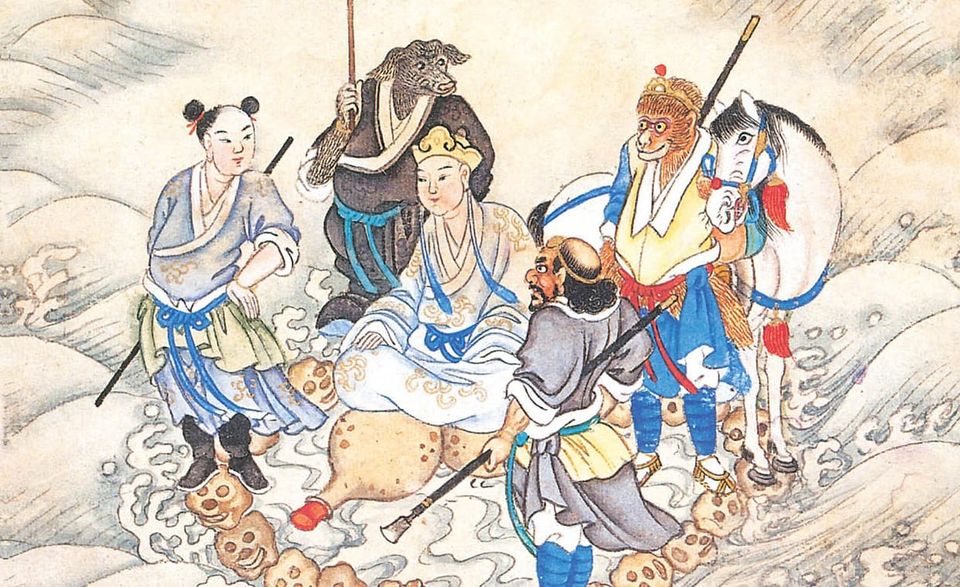
Welcome 👋 to Kerim's Triptych, a free newsletter that delivers three fabulous links to your inbox, two or three times a month. (If you didn't intend to subscribe, or you don't want to receive these anymore, there is an unsubscribe link at the bottom.)
1️⃣ ADHD

"Last year, the Centers for Disease Control and Prevention reported that 11.4 percent of American children had been diagnosed with A.D.H.D., a record high." So writes Paul Tough in an in-depth exploration of ADHD for the New York Times Magazine. He argues against a reductionist medical model of ADHD, and especially against our current over-reliance on medication. Instead, he provides a model which sees ADHD as a complex interaction between biology and the environment.
Medication, he shows, does have remarkable short-term effects, but these do not seem to translate into long-term benefits. Changes in people's environment, such as leaving school or getting a job that caters to their strengths, do seem to have a truly lasting positive impact on people diagnosed with ADHD.
Last October, the M.T.A. group published a new study that explored how A.D.H.D. symptoms in M.T.A. participants changed over the course of their childhood and young adulthood. In contrast to the categorical model of A.D.H.D. — you either have it or you don’t — the researchers showed that for most subjects, their symptoms and level of impairment in fact fluctuated over the years, often quite substantially. . .
When I spoke to Margaret Sibley, the lead author on the fluctuation study and a clinical psychologist and professor at the University of Washington School of Medicine, she pointed out for me a curious finding from an earlier M.T.A. paper: Not only did most of the A.D.H.D. subjects improve, at least temporarily, but 40 percent of the children in the comparison group — who were originally selected for the study specifically because they didn’t have A.D.H.D. — at some point in adolescence had enough symptoms to qualify for an A.D.H.D. diagnosis.
Sibley told me she didn’t believe those children somehow suddenly contracted A.D.H.D. as adolescents. Instead, she said, their circumstances — their environment — might have changed, and that shift in environment might have increased their symptoms. Sibley said it was important to remember that many of the symptoms of A.D.H.D. are actually pretty commonplace; at any given moment, she explained, the average American adult has two or three of them — halfway to an official diagnosis. “This isn’t something that you either have nothing or you have it all,” she said. “That’s part of why this is a gray disorder, when it’s not on its extremes.”
Which isn't to say that there aren't some people who are at the extremes, for whom the condition is particularly high risk. There are. Still, I can't help but feel that it is the schools that are the problem, not the students who are getting medicated.
2️⃣ Kanzi
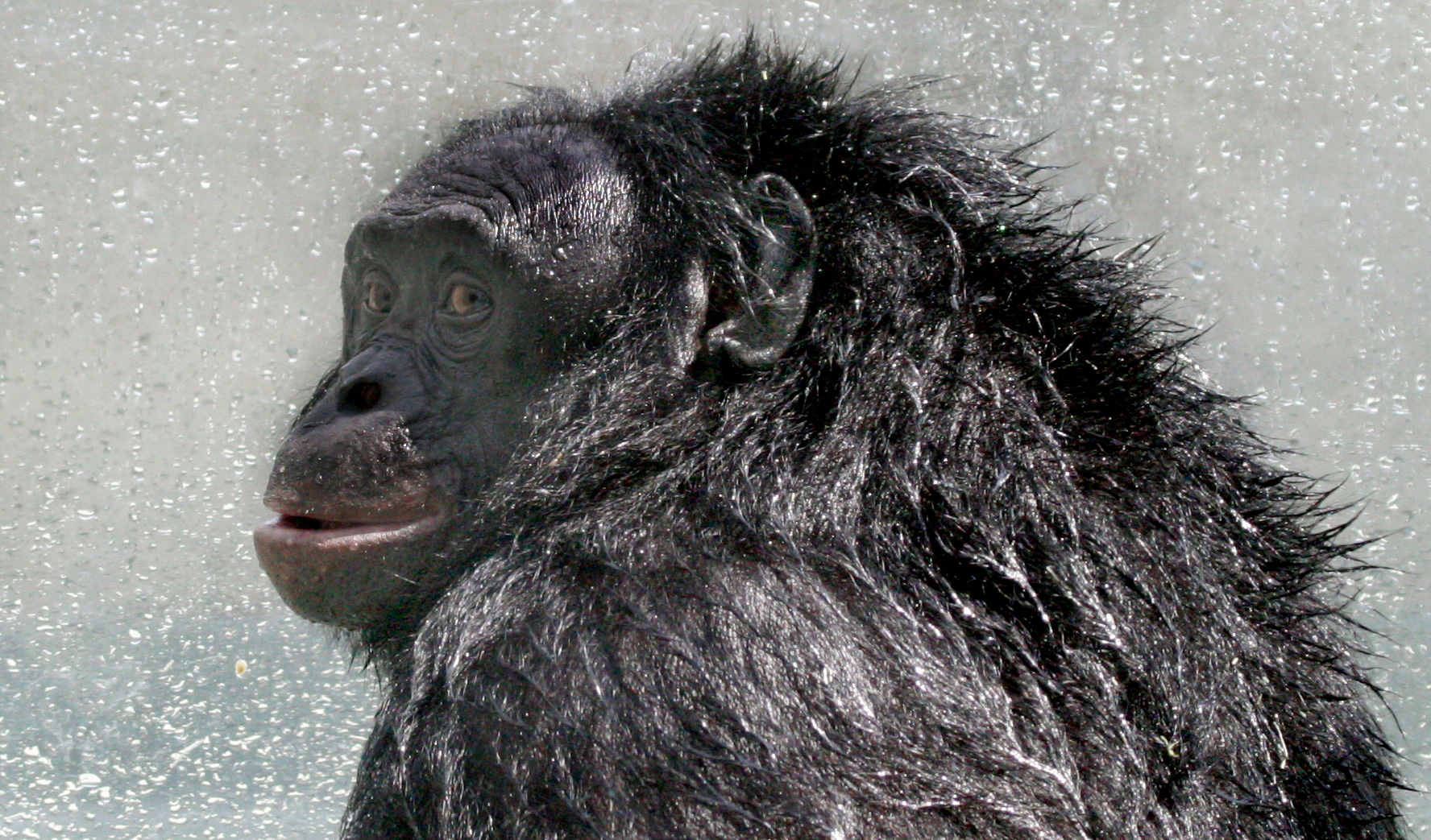
I was sad to learn of the passing of Kanzi, the male bonobo who had learned to communicate using a keyboard marked with special lexigrams, as well as some American Sign Language. Kanzi was 44 when he died this month, and had learned to use some 300 symbols in that time. He was able to combine them in novel ways to make new utterances, and could understand some English phrases.
Scientists used to be much more skeptical of such claims, seeing non-human animals as little more than automatons, but lately there has been more acceptance of the fact that animal communication, even if it might not meet the standards of human language, is far more complex than we once thought. And some even question the practice of using human language as the standard all other animal communication systems must be measured against.
Kanzi was an important part of this transformation, but it is unlikely there will be many more. Another thing that has evolved over the past few decades are the ethical standards by which such animal experiments are undertaken. As this story by Erin Wayman, drawing on an interview with Barbara King, explains, it was the very success of such studies that doomed them:
these experiments demonstrated that apes have complex interior lives, King says. “The ability for people to have a direct conversation with an ape who was expressing that interiority was really mind-blowing.”
But that recognition may have doomed ape-language studies. In recent decades, scientists have questioned whether it’s ethical to conduct experiments on these intelligent, highly social creatures. What happens when a study ends or loses funding? What happens if the ape is no longer around familiar faces or has no one to “talk” to? . . . “In retrospect, I think there was absolutely no intention to harm these apes at all, but I do think they were harmed,” King says. “These apes were asked to transition from their world to a weird kind of mash-up of their world/our world…. Do we have the right to do that to another being?”
3️⃣ Journey to the West
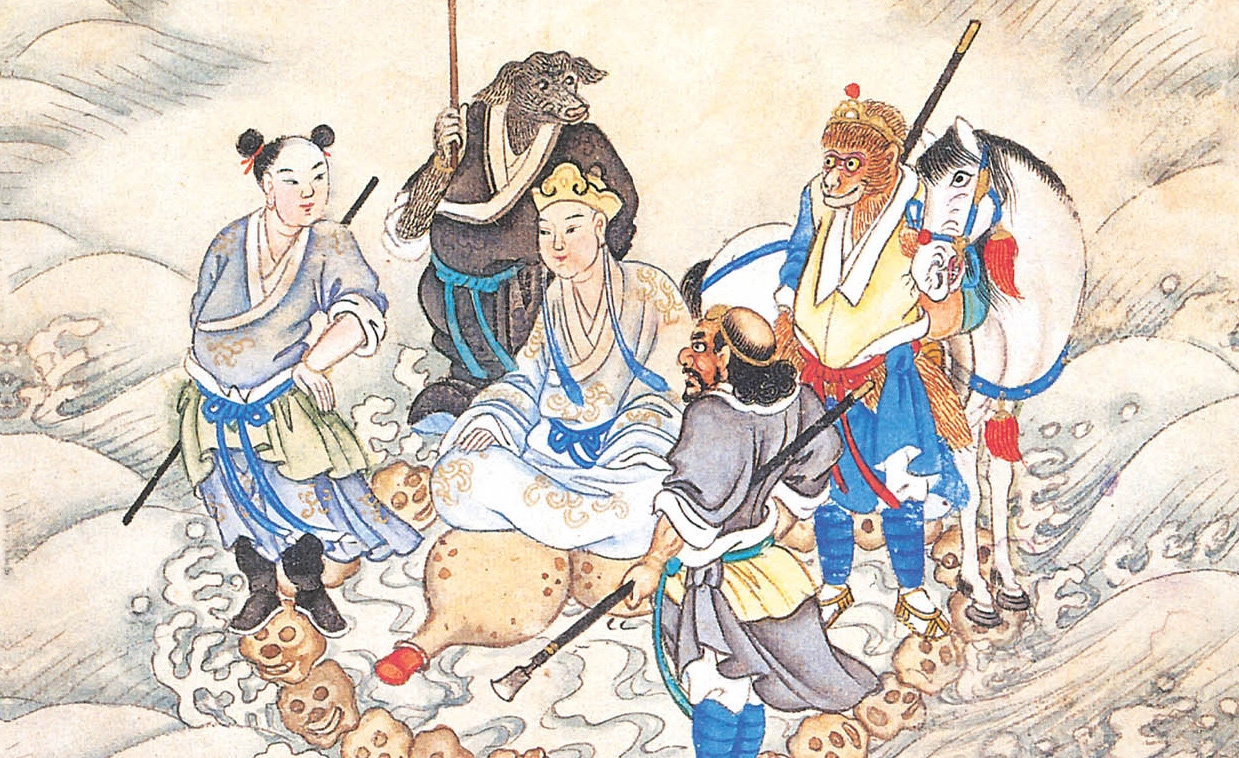
I've been listening to the Chinese Lore podcast for over a decade now. The tag line, "Classic Chinese Stories, Retold in English," sums it up well. Thanks to John Zhu's retellings I've been able to enjoy such classics as The Romance of the Three Kingdoms, The Water Margin, The Investiture of the Gods, and now, my favorite so far, The Journey to the West.
The key term here is "retold," because John isn't just reading aloud some book. Rather, he reinterprets the Classical Chinese text in podcast form for his listeners. While he tries to stick as closely to the source text as possible, he often skips over or summarizes long boring passages, and he interjects ironic commentary about the sexism or the repetitive nature of the narrative. It is like having a story read to you by a smart and funny Chinese uncle.
Having started in 2004, John had a decade of experience under his belt before he took up Journey to the West, and it was worth the wait. I've seen some TV versions before, including the wonderful K-Drama "A Korean Odyssey," but the podcast format allows John to fully explore the whole story from start to finish, including some digressions from the main plot that he's released as supplementary episodes.
Endnote
❤️ Enjoying Triptych? Let your friends know! Encourage them to sign up via the Triptych website. I can't begin tell you how happy it makes me to see even one new subscriber!
💬 Or maybe you'd consider writing a short endorsement for the "kudos" page? You can just email it to me, or fill out this Google form.
💰 Want to ensure the long term sustainability of this newsletter? Consider becoming a sponsor. Sponsorship helps pay for my hosting costs as well as the newspaper and journal subscriptions which, in turn, allow me to provide "gift links" to all subscribers. A big shout-out to my current paid subscribers, you help keep me motivated!
🧧 Don't want to enter into a long term commitment, but still want to support the newsletter? You can always leave a one-time tip if you like.
🦋 Three links not enough for you? Follow me on Bluesky for all the links that don't make it to the newsletter. The newsletter also has its own Bluesky account.
Thank you!
Member discussion