
Kerim's Triptych ❧ Anthropologists on Skis, Taiwanese Amnesia, and Indian Cubism
Welcome 👋 to Kerim's Triptych, a free newsletter that delivers three fabulous links to your inbox, two or three times a month. (If you didn't intend to subscribe, or you don't want to receive these anymore, there is an unsubscribe link at the bottom.)
1️⃣ Anthropologists on Skis
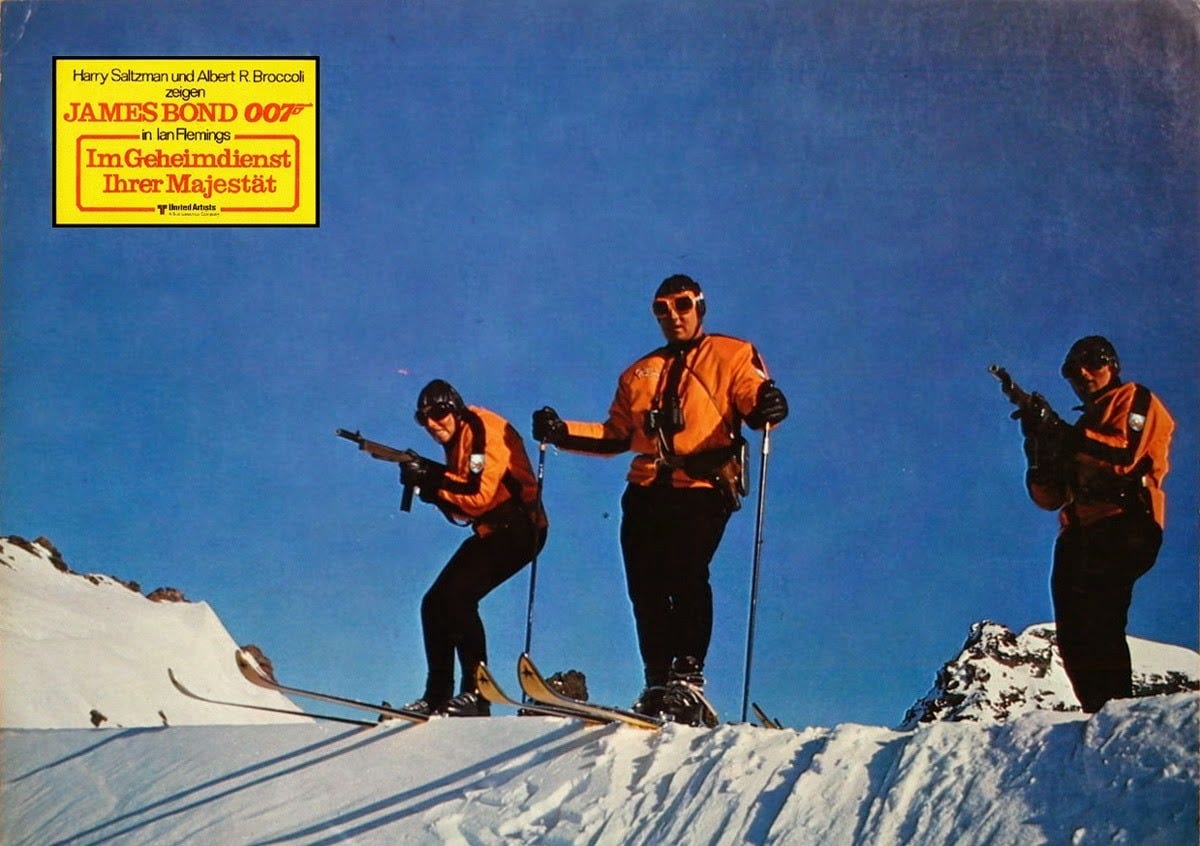
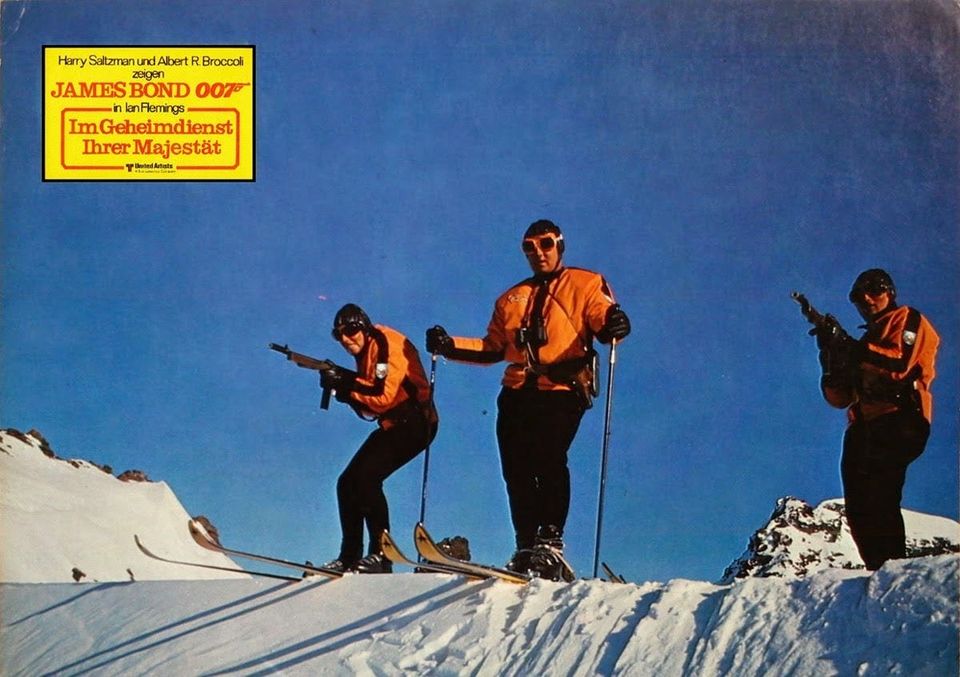
Alex Golub's historical survey of anthropologists who fought fascism is full of wonderful details, but the one that really stuck with me was about Eric Wolf. Wolf's book, Europe and the People Without History, was essential reading when I was in graduate school, but I had no idea that he had been a member of a special mountain unit trained to fight on skis—like in a James Bond film!
Here is how Wikipedia describes the early history of what became known as the 10th Mountain division:
In November 1939, two months after World War II broke out in Europe, during the Soviet Union's invasion of Finland, Red Army efforts were frustrated following the destruction of two armored divisions by Finnish soldiers on skis. The conflict caught global attention as the outnumbered and outgunned Finnish soldiers were able to use the difficult local terrain to their advantage, severely hampering the Soviet attacks and embarrassing their military. Upon seeing the effectiveness of these troops, Charles Minot "Minnie" Dole, the president of the National Ski Patrol, began to lobby the War Department of the need for a similar unit of troops in the United States Army, trained for fighting in winter and mountain warfare. In September 1940, Dole was able to present his case to General George C. Marshall, the Army Chief of Staff, who agreed with Dole's assessment, deciding to create a "Mountain" unit for fighting in harsh terrain. The U.S. Army authorized the formation of the platoon-sized Army Ski Patrol in November 1940.
Alex explains that Wolf had grown up skiing in the alps, so when he enlisted at the age of 19, he was assigned to this newly created unit.
By the beginning of 1945, the Allies had reached the Apennine mountains in Italy between Florence and Bologna, but couldn't cross them because of German units placed high in the mountains. Fighting had ground to a halt and it was the middle of winter, so the 10th Mountain was sent in. Wolf's regiment ascended to 9 of 29 the mountains behind the German position and encircled them, providing artillery support to the other regiments in the 10th as they took the German positions. Not expected to be surrounded on a mountain top in the middle of the winter, the Germans were defeated. From there Wolf's division pursued retreating German forces north across the Po river, and into the Italian alps around Lake Garda. Wolf thus had the surreal experience of liberating the ski resorts where he had vacationed as a child.
Taken from a talk he gave on the topic, Alex doesn't just talk about liberating ski resorts. For instance, he also talks about Germaine Tillion's experience in the French resistance and her later work documenting life in the camps, including her own first-hand experience of Ravensbrück. Thanks to Alex for making his lecture notes public.
2️⃣ Taiwan’s Amnesia

Alice Su's article for The Economist's 1843 Magazine is about Taiwan's uneasy relationship with historical memory. She focuses on the White Terror archives, which have still only been partially opened up to the public.
The White Terror itself is still only murkily understood in Taiwan, and there is no consensus on how to talk about it. This is partly because Taiwan’s transition to democracy in the 1990s was gradual – an evolution, rather than a revolution. There was no storming of the public-records office, the way there was in East Germany. The most prominent secret-police unit, the Garrison Command, was dissolved, but all other security agencies continued functioning as before. In 1995 Taiwan’s first democratically elected president apologised for the 228 Incident and offered compensation to victims of the KMT’s abuses, but declined to offer transparency into that era.
The result is a kind of amnesia. The KMT still exists, but as one party in a competitive political system. Chiang’s statue still stands in the centre of the capital. Green Island is home to a museum on the horrors that happened there, but many Taiwanese see it primarily as a holiday destination with excellent snorkelling. (“It’s the worst habit of Taiwanese people,” said Yang. “Once the past is over they don’t want to talk about it any more. They say, ‘It’s already in the past, let’s move on.’”)
I'm not sure "amnesia" is the right word? I think it is a bit more like senile dementia. That's because it seems every year there is a massive social movement to remind people of what they just had to re-learn the year before. But I am less pessimistic than Su because I feel that there is just enough historical memory in places like South Korea and Taiwan so that people are still willing to fight to preserve democracy at all costs. American leftists who insisted that "it can't happen here" just four years after an attempted coup are the ones with real amnesia.
I feel like I'm breaking my "three things" rule by posting this article because the accompanying photos by An Rong Xu are worthy of a separate post on their own. Fortunately, I only have to share a single link and you can enjoy each part equally, without needing to show preference for one over the other.
3️⃣ Indian Cubism
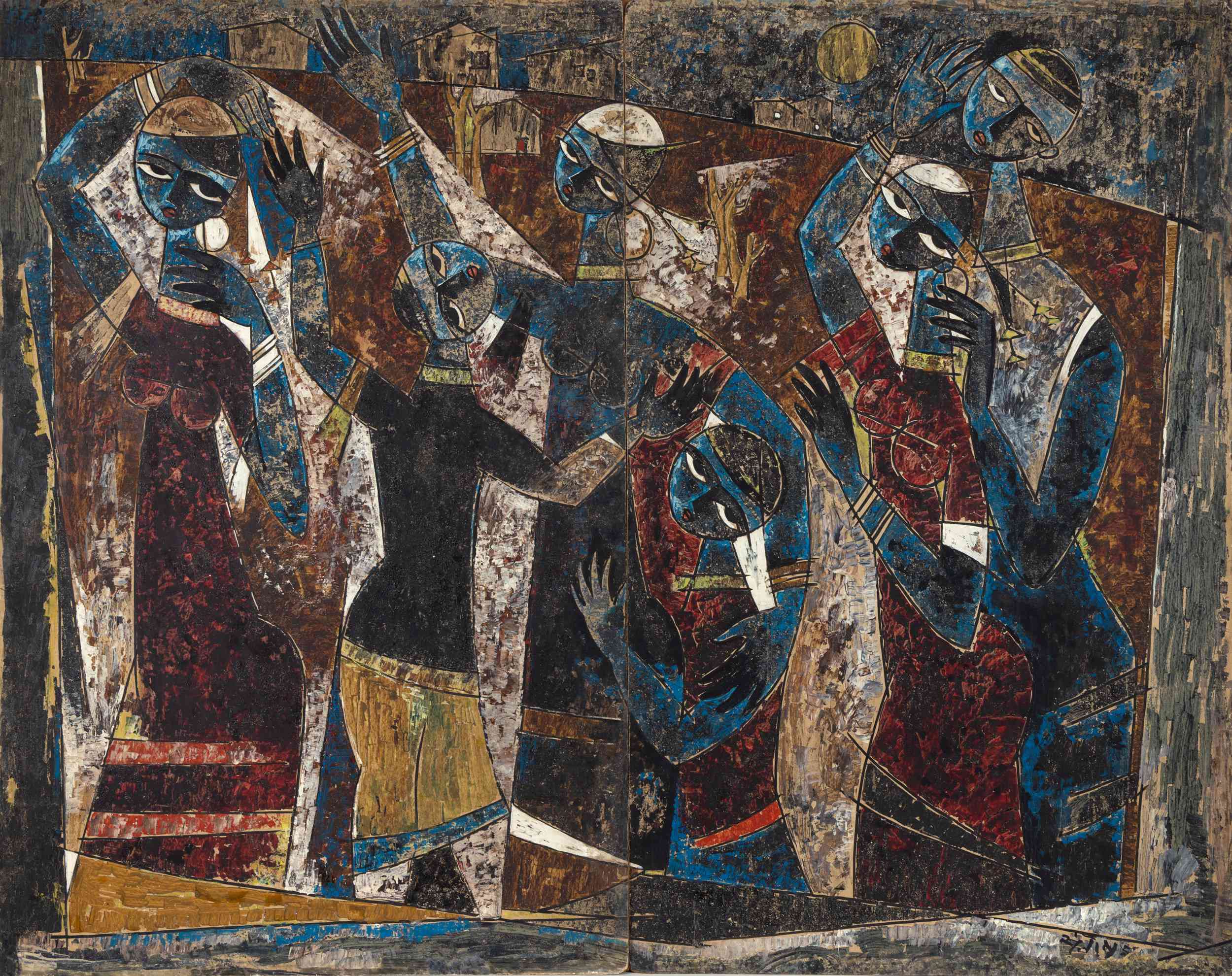
Above is a painting by G. R. Santosh (1929 – 1997), a Kashmiri writer and poet, whose work was heavily influenced by tantric philosophy. I came across this early painting of his in an essay by Shatadeep Maitra. Titled "How Indian artists transformed Western ‘Cubism,’" it is taken from the catalog for a recent art exhibition.
Endnote
❤️ Enjoying Triptych? Let your friends know! Encourage them to sign up via the Triptych website. I can't begin tell you how happy it makes me to see even one new subscriber!
💬 Or maybe you'd consider writing a short endorsement for the "kudos" page? You can just email it to me, or fill out this Google form.
💰 Want to ensure the long term sustainability of this newsletter? Consider becoming a sponsor. Sponsorship helps pay for my hosting costs as well as the newspaper and journal subscriptions which, in turn, allow me to provide "gift links" to all subscribers. A big shout-out to my current paid subscribers, you help keep me motivated!
🧧 Don't want to enter into a long term commitment, but still want to support the newsletter? You can always leave a one-time tip if you like.
🦋 Three links not enough for you? Follow me on Bluesky for all the links that don't make it to the newsletter. The newsletter also has its own Bluesky account.
Thank you!
Member discussion