
Kerim's Triptych ❧ Hukou, Linebacker, Homo Detritus

Welcome 👋 to Kerim's Triptych, a free newsletter that delivers three fabulous links to your inbox, two or three times a month. (If you didn't intend to subscribe, or you don't want to receive these anymore, there is an unsubscribe link at the bottom.)
If you enjoy Triptych, please tell a friend about it. Thanks!
1️⃣ Hukou

Eli Friedman (no relation), has an excellent analysis of China's "Groundhog Day-like" claims that it is reforming the hukou system:
The hukou is, above all, a tool for realizing enhanced exploitation of the rural population via mobility control. Based on the Soviet propiska internal passport system, the modern instantiation of hukou was implemented in 1958. This new system linked the provision of social goods to a specific place. Leaving one’s place of official hukou registration meant forsaking access to state-provided goods, including health care, education, pensions, and, at the time, food. The population was divided up into urban and rural populations, with the former enjoying greater access to services while the later enjoyed collective property rights in the countryside. Equally important, and often overlooked, is that people were pinned to a specific city or village; one could not move from a small provincial city in Shanxi to Beijing, just as they pleased, for example. The hierarchy among cities is often as important as that between rural and urban places. Finally, hukou was and remains a highly fragmented institution, as it is administered by the police at the prefectural level. The central government thus has limited control over how localities regulate local citizenship.
This last point, regarding the "hierarchy among cities," is the most interesting part of his article. While,
in small and medium sized cities, where much of the growth in urbanization has been seen in recent years, it has become much easier for rural people to secure local urban hukou.
However,
the largest and wealthiest cities—not coincidentally, the places with the best social services by a huge margin—remain highly fortified bastions of privilege.
2️⃣ Linebacker
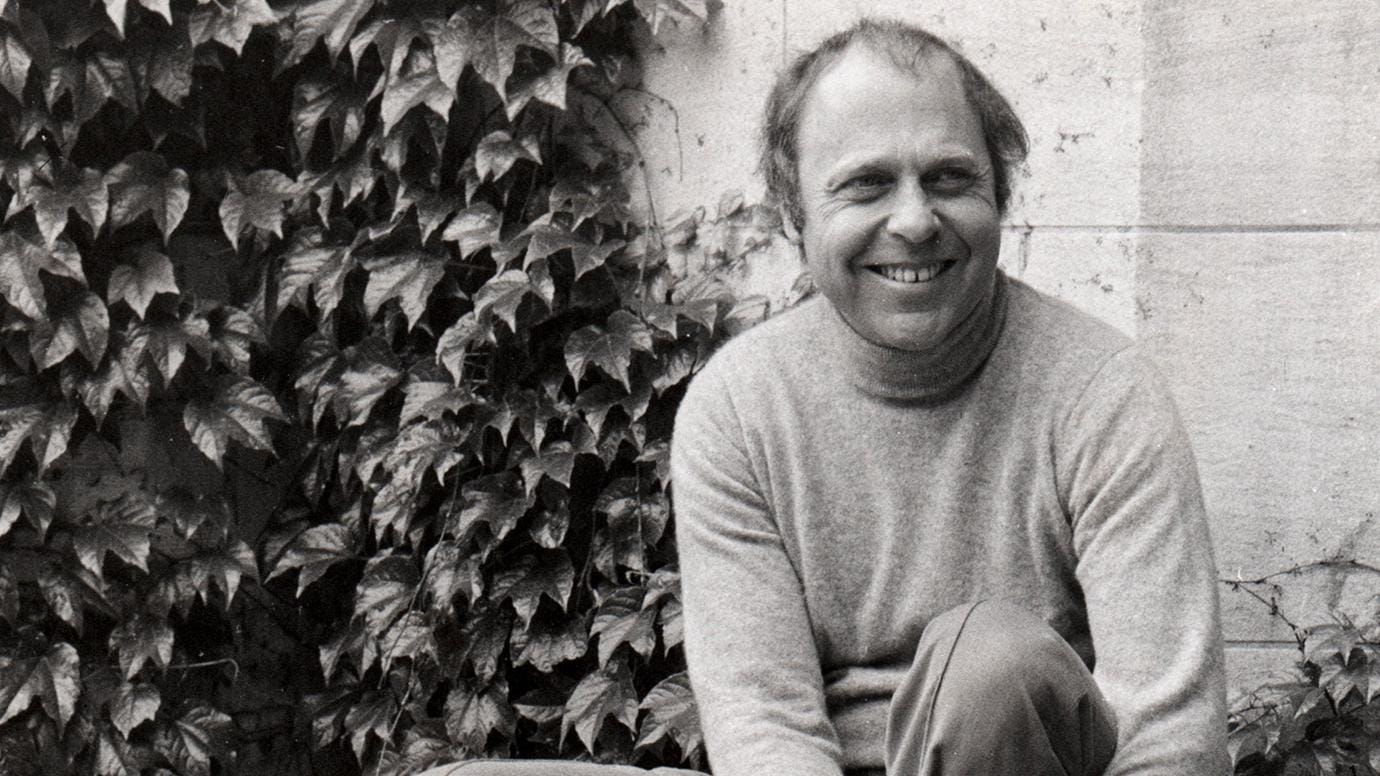
My good friend Alex Golub has been working on a biography of Marshall Sahlins for several years now, and his new entry in the Encyclopédie Bérose des histoires de l'anthropologie gives us a taste of what that might look like. (The publication is French, but the essay is in English.) Below is a taste of that taste:
On why Sahlins's life is important for unerstanding anthropology:
Because Sahlins was long-lived and highly influential, his transformations shed light not only in his internal intellectual life, but on the near century of anthropological history that he lived through.
On his personality:
To non-American readers, key aspects of Sahlins’s personality—the personal nemeses, masculine agonism, and thirst for fame attained through heroic effort—may seem reminiscent of Achilles or other figures of classical antiquity. In fact, Sahlins was emulating a middle linebacker. His first publication is a glowing account in the student newspaper of one of the team’s trainers.
On his marriage:
Throughout their seventy years of marriage, Barbara would have total control of the family finances, the interior decoration of their house, and even Marshall’s diet (he occasionally tried to sneak hot dogs). Thus while Sahlins would go on to be the author of Stone Age Economics, Barbara would have the greater achievement of becoming the author of Marshall Sahlins. It would be a long and happy partnership, albeit one in which their three children would sometimes struggle for attention in a household organized entirely to serve Marshall’s needs.
On his politics:
The first teach-in was in March of 1965. Soon teach-ins were being held across the country. A national teach-in was held in Washington DC in May. Sahlins became central to the movement, organizing tirelessly through his academic networks to spread the new form of protest. It is hard not to see parallels between Marshall’s activism and his brother Bernie’s work as a theater producer—perhaps Marshall was finally the equal to his brother. In August, Sahlins visited Vietnam himself to tour military facilities. The result were works of activist-journalism like “The Destruction of Conscience in Vietnam” (Sahlins 1966b), a widely-read account of his time there. Soon Sahlins was involved in other activist politics, opposing the use of social science to achieve war aims, and serving on the board of the National Conference for New Politics, which sought to unite the anti-war and civil rights movements. Sahlins had become a nationally known critic of American imperialism.
And on how his political liberalism came to be seen as out of touch:
In fact, many of Sahlins’s positions began to appear conservative in the 1990s. As anthropology drifted to the left, his political liberalism seemed increasingly out of touch with the discipline’s moral imagination. Sahlins’s response was a stream of publications denouncing “postcolonialism” and “postmodernism” at the very moment these movements became hegemonic. His critiques in works like Waiting for Foucault (1999f) were less rigorous and more ad hominem than Sahlins’s earlier attacks of sociobiology and materialism. From the 1950s to the 1980s, Sahlins had always been fashion-forward in anthropology. Now in the 1990s, Sahlins backed the wrong theoretical horse.
3️⃣ Homo Detritus

From Vice:
When French photographer Stephan Gladieu traveled to the city’s “apocalyptic” waste sites, he discovered a collective of artists called Ndaku Ya La Vie Est Belle, who were finding inventive ways to draw attention to this spiraling trash crisis. Playing with the tradition of African masks, they transformed plastic containers, old car parts, flip-flops, CDs, electronic devices, and cans into wry acts of defiance.
Endnote
❤️ Enjoying Triptych? Let your friends know! Encourage them to sign up via the Triptych website. I can't begin tell you how happy it makes me to see even one new subscriber!
💬 Or maybe you'd consider writing a short endorsement for the "kudos" page? You can just email it to me, or fill out this Google form.
💰 Want to ensure the long term sustainability of this newsletter? Consider becoming a sponsor. Sponsorship helps pay for my hosting costs as well as the newspaper and journal subscriptions which, in turn, allow me to provide "gift links" to all subscribers. A big shout-out to my current paid subscribers, you help keep me motivated!
🧧 Don't want to enter into a long term commitment, but still want to support the newsletter? You can always leave a one-time tip if you like.
🦋 Three links not enough for you? Follow me on Bluesky for all the links that don't make it to the newsletter. The newsletter also has its own Bluesky account.
Thank you!
Member discussion