
Kerim's Triptych for Sunday, September 8th, 2024
Welcome 👋 to Kerim's Triptych, a free newsletter that delivers three fabulous links to your inbox, two or three times a month. (If you didn't intend to subscribe, or you don't want to receive these anymore, there is an unsubscribe link at the bottom.)
1️⃣ The Renters’ Utopia
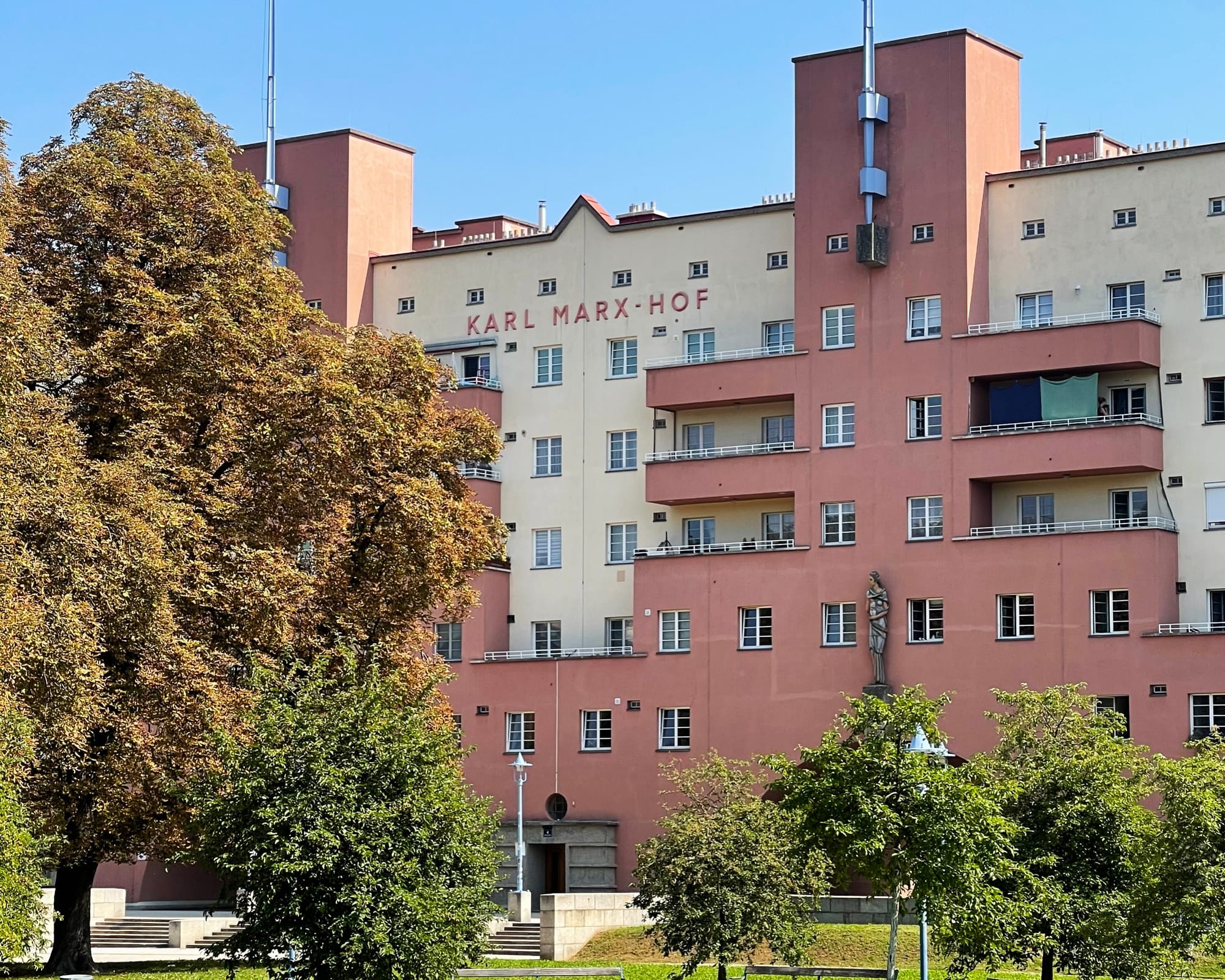
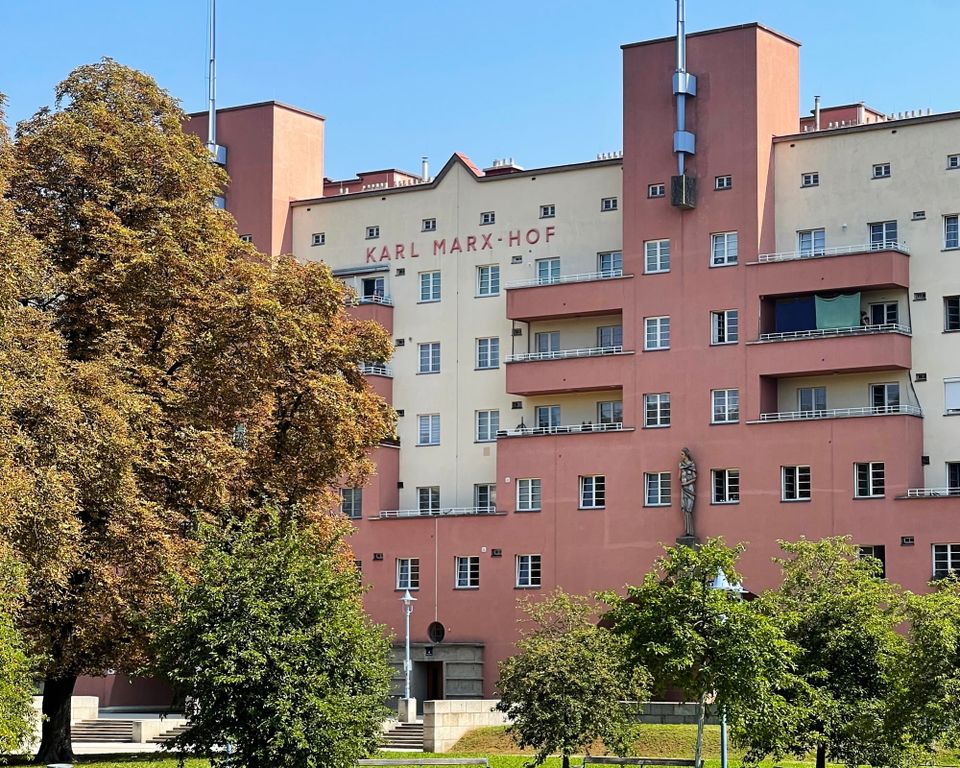
One of the highlights of our recent trip to Vienna was a visit to the famous experiment in social housing, Karl Marx Hof. Built during the "Red Vienna" period, right before the war. It is a massive structure that is over a kilometer long and was designed for a population of five thousand people. A city within a city. But even today Vienna remains a kind of "Renters' Utopia," as this New York Times article from last year reported.
In Vienna, 43 percent of all housing is insulated from the market, meaning the rental prices reflect costs or rates set by law — not “what the market will bear” or what a person with no other options will pay. The government subsidizes affordable units for a wide range of incomes. The mean gross household income in Vienna is 57,700 euros a year, but any person who makes under 70,000 euros qualifies for a Gemeindebau unit. Once in, you never have to leave.
Once a country (such as the US and Taiwan) decides to encourage home ownership as way of accumulating personal wealth, it becomes politically impossible for governments to take any action which would lower prices. In Vienna, on the other hand, over eighty percent of the population, including many of the wealthy, rent. Wilbur Cohen, one of the founders of the Social Security system in the US, famously said that "A program for the poor is a poor program." It seems that Vienna has learned that for socialized housing to be successful it needs to be for everyone, not just the poor.
2️⃣ Barbed Wire Telephone Networks
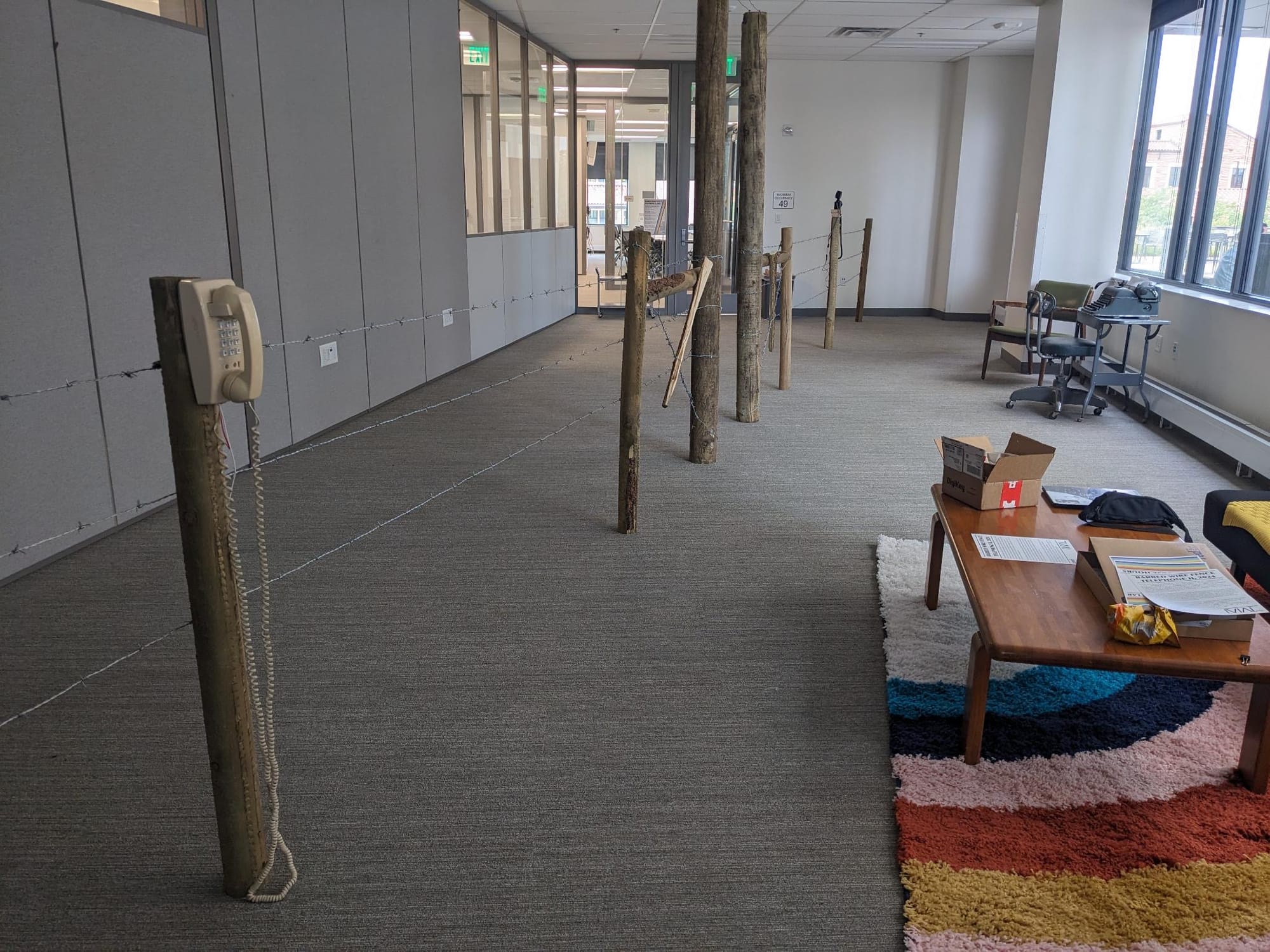
This, by Lori Emerson, is the most steampunk story I've read all year. It describes how rural farmers and ranchers in the 1890s created ad-hoc phone networks using barbed wire fences.
Two key developments in the 1890s led to its adoption primarily by farmers, ranchers, and those living in rural or isolated areas especially in the U.S. and Canada: the widespread availability and inexpensiveness of barbed wire in the 1890s; and the erosion of Alexander Graham Bell’s patent monopoly in 1893 and 1894 which, according to Robert MacDougall, led to the sudden explosion of 80 to 90 independent telephone companies manufacturing telephone sets that could be used outside of the burgeoning Bell telephone system.
Bob Holmes elaborates on the process: “the barbed wire networks had no central exchange, no operators–and no monthly bill. Instead of ringing through the exchange to a single address, every call made every phone on the system ring. Soon each household had its own personal ringtone…but anyone could pick up…Talk was free, and so people soon began to ‘hang out’ on the phone.” The fence phone lines could also be used to broadcast urgent information to everyone on the line. Reportedly, the quality of the signal traveling over the heavy wire was excellent, but weather would frequently cause short circuits which locals attempted to fix with anything that could serve as an insulator (such as leather straps, corn cobs, cow horns, or glass bottles).
As much as I like this story, I would be remiss if I didn't also point out that barbed wire has a much less savory history, as it was used to fence off Indigenous territory. Native Americans called it "the devil's rope," which is also the name of a book on the cultural history of barbed wire by Alan Krell.
3️⃣ Synthesizing the Silk Roads
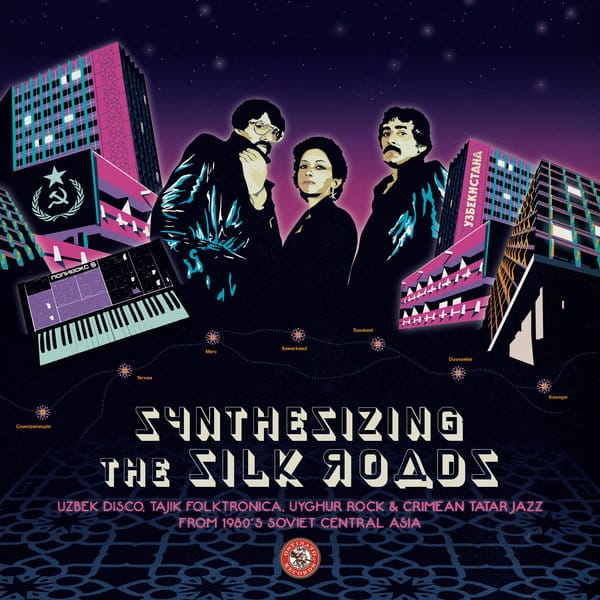
I absolutely love this compilation, whose full title is "Synthesizing the Silk Roads: Uzbek Disco, Tajik Folktronica, Uyghur Rock & Crimean Tatar Jazz from 1980s Soviet Central Asia." I've linked here to the product page where you can go to read more about the collection, but you can also buy the album on Bandcamp or stream it on Spotify.
Synthesizing the Silk Roads is the soundtrack of a little-known revolution where Soviet DJs’ demand for homegrown music inadvertently reshaped world history. It spotlights Central Asian crossroads that bridged east and west, making more than a modest contribution to global culture. Drop the needle, and you’re not just hearing rare Soviet dance music. You’re journeying along the Silk Roads, revisiting raucous USSR disco nights, and immersing in grooves that inspired Soviet youth to envision a different future, ultimately unraveling the Iron Curtain from within. In the summer of 1941, as the Nazis invaded the USSR, Stalin ordered a mass evacuation. Sixteen million people were put on trains bound eastward to Soviet Central Asia, especially Tashkent, Uzbekistan’s picturesque capital. Among those onboard were gramophone engineers who later established the Tashkent Gramplastinok plant in 1945. This factory became central to Soviet record production, part of a network of plants churning out 200 million records by the 1970s.
Endnote
❤️ Enjoying Triptych? Let your friends know! Encourage them to sign up via the Triptych website. I can't begin tell you how happy it makes me to see even one new subscriber . . .
💬 Or maybe you'd consider writing a short endorsement for the "kudos" page? You can just email it to me, or fill out this Google form.
💰 Want to ensure the long term sustainability of this newsletter? Consider becoming a sponsor. A big shout-out to my current paid subscribers. Their contributions keep this place running — and help keep me motivated.
🧧 Don't want to enter into a long term commitment, but still want to support the newsletter? You can always leave a one-time tip if you like.
🦋 Three links not enough for you? Follow me on Bluesky for all the links that don't make it to the newsletter.
Thank you!
Member discussion