
Kerim's Triptych ❧ Bud Dajo, Shame, Soundtrack
Welcome 👋 to Kerim's Triptych, a free newsletter that delivers three fabulous links to your inbox, two or three times a month. (If you didn't intend to subscribe, or you don't want to receive these anymore, there is an unsubscribe link at the bottom.)
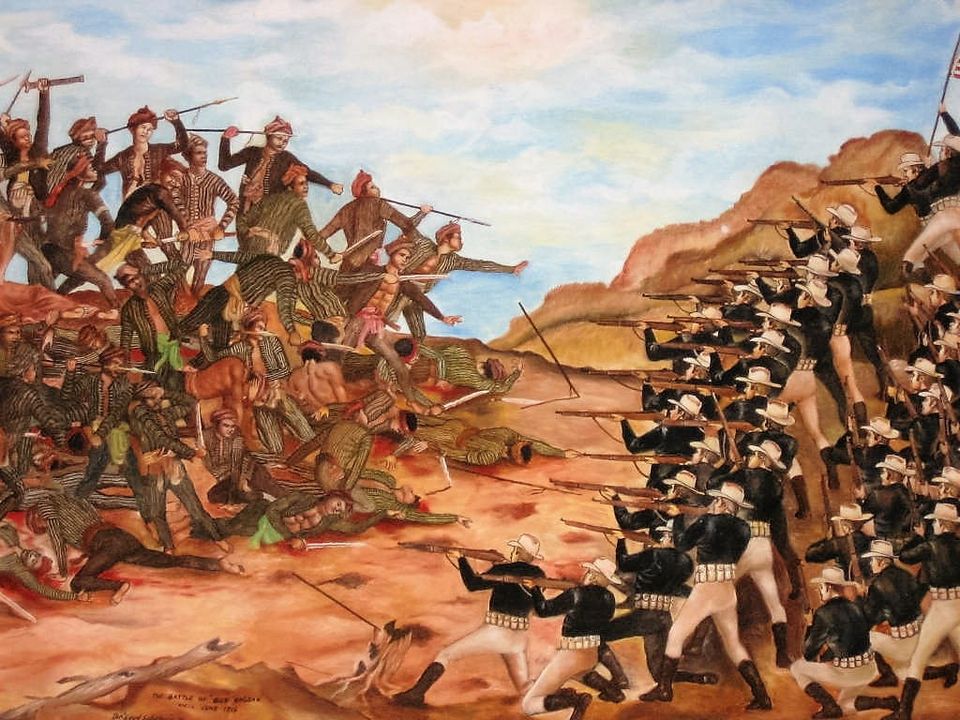
1️⃣ Bud Dajo
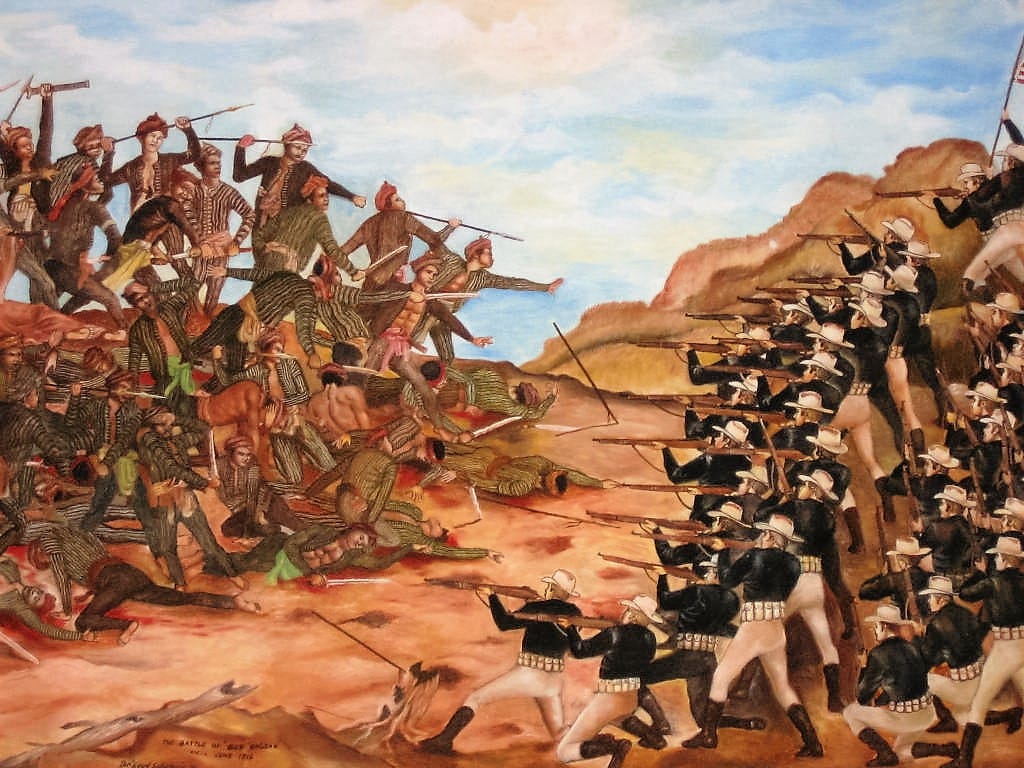
Vicente Rafael has written a review of Kim Wagner's book, Massacre in the Clouds: An American Atrocity and the Erasure of History, on the 1906 Bud Dajo massacre by US forces, and the memory of that massacre in both the US and in the southern Philippines where it took place. (Warning: The article, like the book, focuses on one photograph taken by the soldiers with the bodies of the dead Moro victims. I've chosen not to reproduce that photograph here, but you will see it if you click the link.) Rafael's essay, published in the New York Review of Books, highlights Wagner's discussion of how the Moro have remembered the massacre:
Unlike Americans, the Moros do not have the privilege of forgetting these traumatic events. The archives contain no accounts from the very few survivors of the massacre or their descendants, so Wagner quotes instead several passages from the kissas, Moro oral narratives and songs in the Tausug language. One kissa, sung as early as 1909 though not recorded until the late twentieth century, recounts not the “massacre” but the “battle” of Bud Dajo. It tells of the Moro people’s endurance as they await the attacks inside the crater and their determination to fight: “All came out to fight them/The struggle was furious/People were shooting everywhere/There were so many killed/You could wash yourself in the blood.”
As well as the continued violence that has taken place after independence:
Many other massacres have occurred in the late twentieth and twenty-first centuries in other villages in Muslim Mindanao, such as Manili, Kauswagan, Tictapul, Patikul, and Pata Island, along with occasional attacks in Jolo and most recently Marawi City. As with earlier massacres, the military bombed villages, executed men, and raped women indiscriminately. And as with Bud Dajo, nearly all of them remain largely forgotten or ignored outside of these areas.
2️⃣ Shame
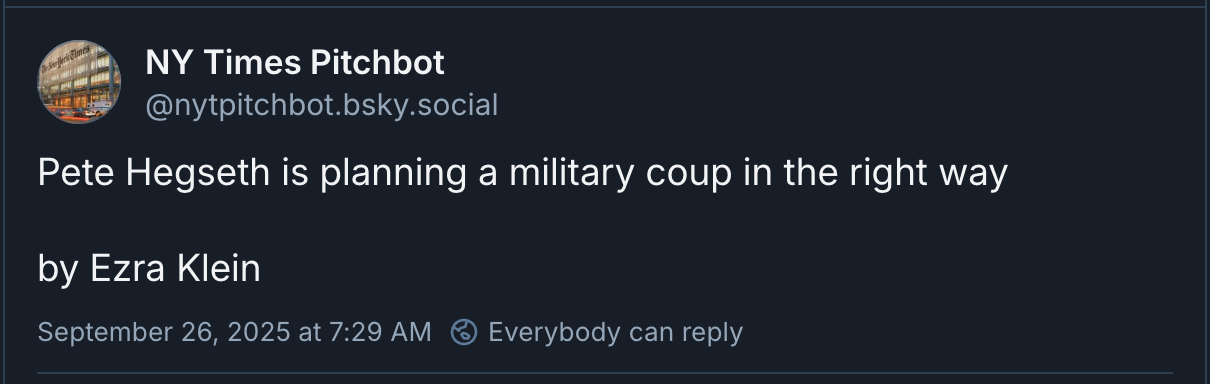
The philosopher Olúfẹ́mi Táíwò has started a regular column for the Boston Review, and his first installment is one of the best things written on the whole kerfuffle surrounding Ezra Klein's absurd claim that Charlie Kirk was “practicing politics the right way." In particular, he picks up on something Klein said in an interview where he sought to defend himself from all the pushback he had received:
He contends that living with one another on the basis of “social shame and cultural pressure” cannot work and would not be worthwhile if it did: a nation where such things flourished would not be “a free country.”
To the contrary, Táíwò argues, "political correctness . . . set basic ground rules for social life—at least, in politically mixed company," ground rules which he sees as essential for the kind of "civility" necessary to make life livable for marginalized groups. Without such ground rules, he says, all we are left with are "the most naked forms of domination and subjugation."
We might more accurately call it exactly the “civility” that centrists like Klein otherwise pretend to champion, even while they seek to hollow out even this meager social protection of its efficacy. These codes of neighborliness or of common decency are, in other words, the bare minimum for us to exist peacefully as profoundly different people who nevertheless share the same time and place.
Common decency, then, stigmatizes people that do not participate in it—removes them from voluntary association, as Russell exemplified. We indeed have to live with one another, but terms and conditions apply.
Yes, there is the risk that a culture of shaming might lead to overreach, but he feels that "the possibility of overreach is a price worth paying exactly because shame serves as a robustly liberal alternative to the political violence that Klein and company rightly abhor."
Our values and principles ask more than most of us are able to give—if they don’t, they are probably too weak to be worth holding. But we don’t have to celebrate our failures or, worse still, confuse them with our successes. This is one valuable function of shame: it reminds us of who we want to be when we fall short, a goalpost that is necessarily anchored to the lofty height that our conduct fell beneath. We also encourage and defend these general social standards when we hold others to them, and not just ourselves.
3️⃣ Soundtrack to a Coup d'Etat
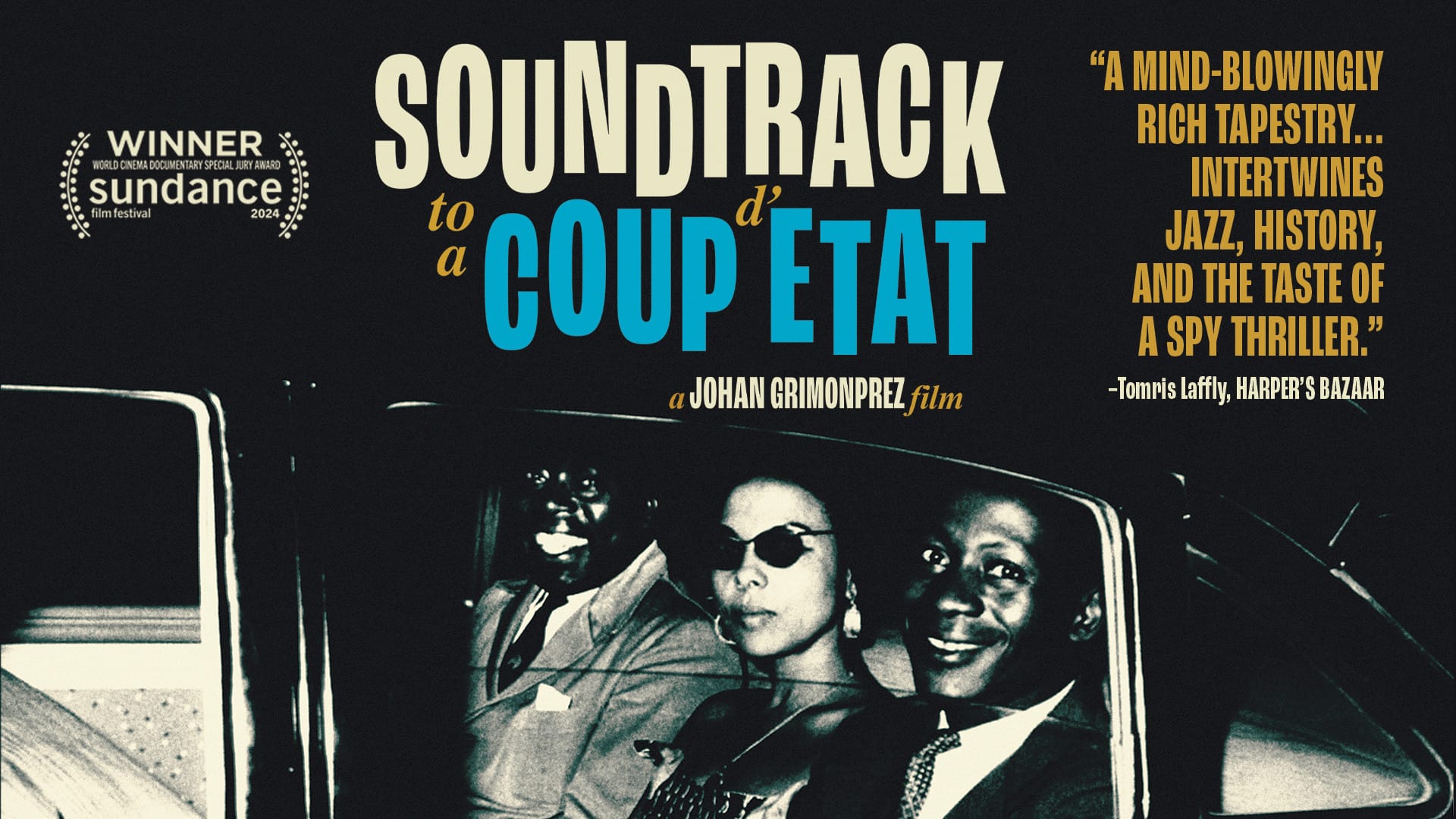
I already knew the story of Patrice Lumumba, the first prime minister of independent Congo, including his death at the hands of Mobutu, from Raoul Peck's excellent 2000 film, Lumumba. I even knew the story of Luis Armstrong's concert and how it had served as a cover for a CIA mission to Congo shortly before his execution. (Though I don't recall if I had learned that from the same film or from something else?) So I wasn't sure if I would learn much new by watching the 2024 documentary Soundtrack to a Coup d'Etat?
I shouldn't have worried. Soundtrack is a completely different kind of film altogether. Jazz doesn't just describe the soundtrack, but also the film's editing style. Despite (or perhaps because of) the film's experimental approach, it packs a lot of information. Unlike Peck's film Soundtrack widens the lens to place the story in a global context, including regional developments in Africa, Belgian commercial interests, the CIA, and the Cold War.
It is also a pleasure to watch. Not just because of the jazz soundtrack, but the creative sound design and imaginative use of historical footage as well. I could easily watch this film again just to appreciate the film's craftsmanship. Nor are the experimental aspects simply a stylistic flourish, they help us understand the revolutionary energy and cross-fertilization of that period in history. As with the music, the style is the message.
Endnote
❤️ Enjoying Triptych? Let your friends know! Encourage them to sign up via the Triptych website. I can't begin tell you how happy it makes me to see even one new subscriber!
💬 Or maybe you'd consider writing a short endorsement for the "kudos" page? You can just email it to me, or fill out this Google form.
💰 Want to ensure the long term sustainability of this newsletter? Consider becoming a sponsor. Sponsorship helps pay for my hosting costs as well as the newspaper and journal subscriptions which, in turn, allow me to provide "gift links" to all subscribers. A big shout-out to my current paid subscribers, you help keep me motivated!
🧧 Don't want to enter into a long term commitment, but still want to support the newsletter? You can always leave a one-time tip if you like.
🦋 Three links not enough for you? Follow me on Bluesky for all the links that don't make it to the newsletter. The newsletter also has its own Bluesky account.
Thank you!
Member discussion