Kerim's Triptych ❧ Geopolitics, Race, Peterloo
Welcome 👋 to Kerim's Triptych, a free newsletter that delivers three fabulous links to your inbox, two or three times a month. (If you didn't intend to subscribe, or you don't want to receive these anymore, there is an unsubscribe link at the bottom.)
1️⃣ State-capitalist geopolitics
Pundits commenting on the present moment seem to have run out of ideas. They are constantly recycling older concepts: neoliberalism, neoimperialism, neomercantilism, etc. I don't want to dismiss the importance of these concepts, but if you find yourself twisting and distorting a concept to make it fit, maybe it is time for a new concept? By the time you've shoved a round peg into a square hole, it isn't a round peg anymore.
Looking around for something new, I came across the report, "The new frontline," published by The Transnational Institute (TNI).* It proposes "state-capitalist geopolitics" as a way to talk about the present moment. It doesn't discuss Trump (it was published around the time of his inauguration), but it reveals some historical and international trends that helped put things into perspective for me.
So what is state-capitalist geopolitics?
what makes state-capitalist geopolitics a distinct and qualitatively different mode of geopolitical practice is both its fundamental logic (shaping and exerting control over the networks that underpin globalisation, controlling their most strategic nodes) and its tools and signature forms (the extensive mobilisation of muscular state economic interventionism and revamped state ownership).
The first part of their argument is that there has been a shift to the direct intervention of states in the global networks. This contrasts with the neoliberal era, where the focus was on removing barriers for the intervention of multinational companies in local economies. Examples of such global networks include "semiconductor supply chains and electric vehicle (EV) production," as well as "digital platforms, transport infrastructure, and financial payment systems." Each new global crisis (9-11, COVID, the stock market crash, etc.) has given states new excuses to intervene in these networks.
The second part of their argument refers to the specific tools used by states to control these networks: "trade tariffs, foreign investment restrictions, export controls, financial sanctions" as well as the increased use of sovereign wealth funds, techno-industrial policies, and even state-owned corporations.
Looking back at Biden, we can see that he was very happy to use many of these tools during his presidency. (Furthering my case that it is a mistake to think of him as a traditional "neoliberal.") But it is harder to know what to make of Trump? It seems to me that he is using some of these same tools, but with the goal of placing himself personally in the center of these networks, in order to force others to grovel before him. This is a strategy he seems to have copied from Viktor Orbán. "L'État, c'est moi."
* There are four authors for this report: Ilias Alami, Jessica DiCarlo. Steve Rolf, and Seth Schindler.
2️⃣ Race and Science
Anthropologist Jon Marks has one of the most delightfully succinct summations of the science that disproves the concept of "race" (as applied to humans). It was written as a letter to the NY Times, but they didn't publish it, so he posted it directly to his own blog.
Now if you decided, for whatever reason, to focus only on biological distinctions, ignoring the primary dimension of human variation, what would you see? Actually, you would see that you can't make that distinction so readily, because so much of human biology is in fact strongly influenced by culture, from the shape of your head to your likelihood of dying from tuberculosis. Human bodies indeed absorb a great deal of the cultural world.
But suppose, however perversely, that you decide to ignore both cultural differentiation and bodily differentiation, and decide to focus exclusively on the human gene pool. Would you see race there? And if not, then what would you see? And the big discovery of human population genetics towards the end of the 20th century was that you don't see race; rather, you see nearly all detectable genetic variations nearly everywhere. Human genetic variation is primarily polymorphic and cosmopolitan. However it is measured, upwards of 85% of the detectable human genetic variation is variation within groups rather than between groups. That doesn't mean that there are no geographical patterns, of course.
So if we ignore the cultural variation, the bodily variation, and the primary, polymorphic, pattern of genetic variation, and we decide to focus only on genetic variation from group to group, what patterns do we find? Is race finally there? No, we find gradual change across geographical gradients, a pattern that genetic anthropologists describe as clinal. We find that people are similar to those nearby, and different from those far away – although even then, only in an ideal, non-urbanized, precolonial world. The genetics of New York City is something else entirely.
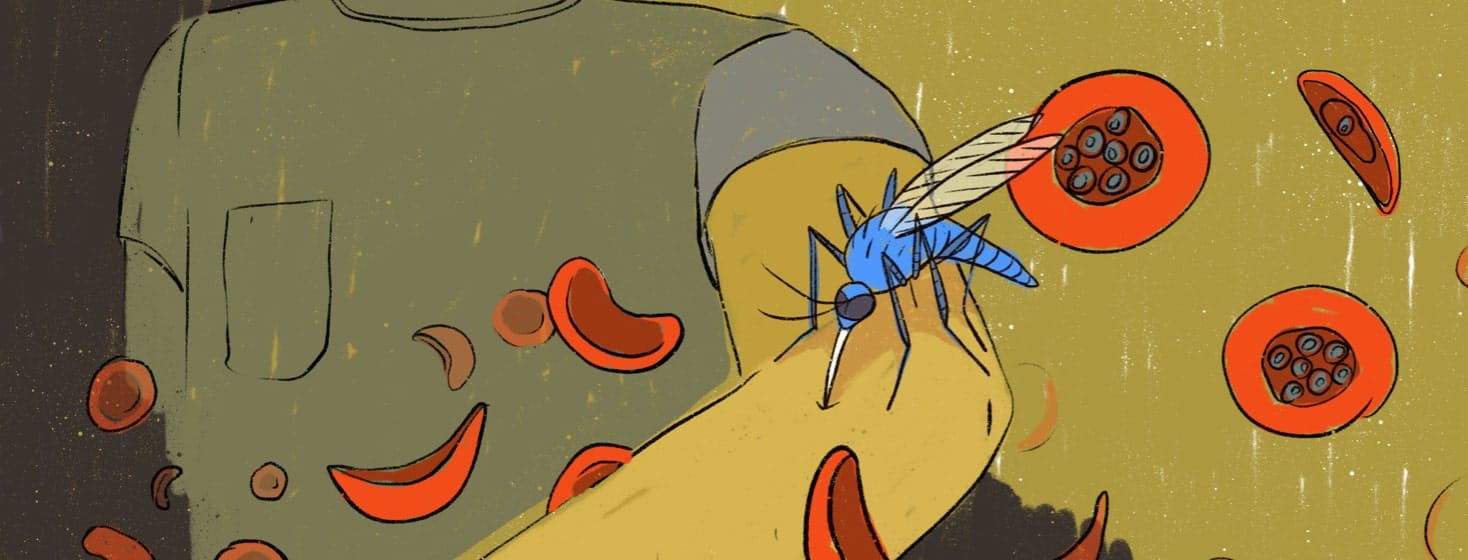
If we ignore the cultural, the physical, the polymorphic and clinal genetic variation, then what is left? Do we finally uncover the primordial human divisions? No, we find that there are all kinds of interesting local genetic patterns in the human gene pool, with different cultural identities being associated with different genetic histories and with different probabilistic genetic risks at present. But those different genetic risks don’t map on to race: . . . Sickle-cell anemia is found in Saudi Arabia and Greece, as well as in West Africa. Why? Because it is associated with malaria, not with being African. And these remain risk factors for particular populations, still afflicting only a small minority within each population – just simply a larger minority than in other populations.
When you look at the human species scientifically, this is what you find. It isn’t race. Race comes from somewhere else.
What then, do we mean when we say race is a “social construction”? We mean that it is a product of history, not of biology. . .
3️⃣ Peterloo
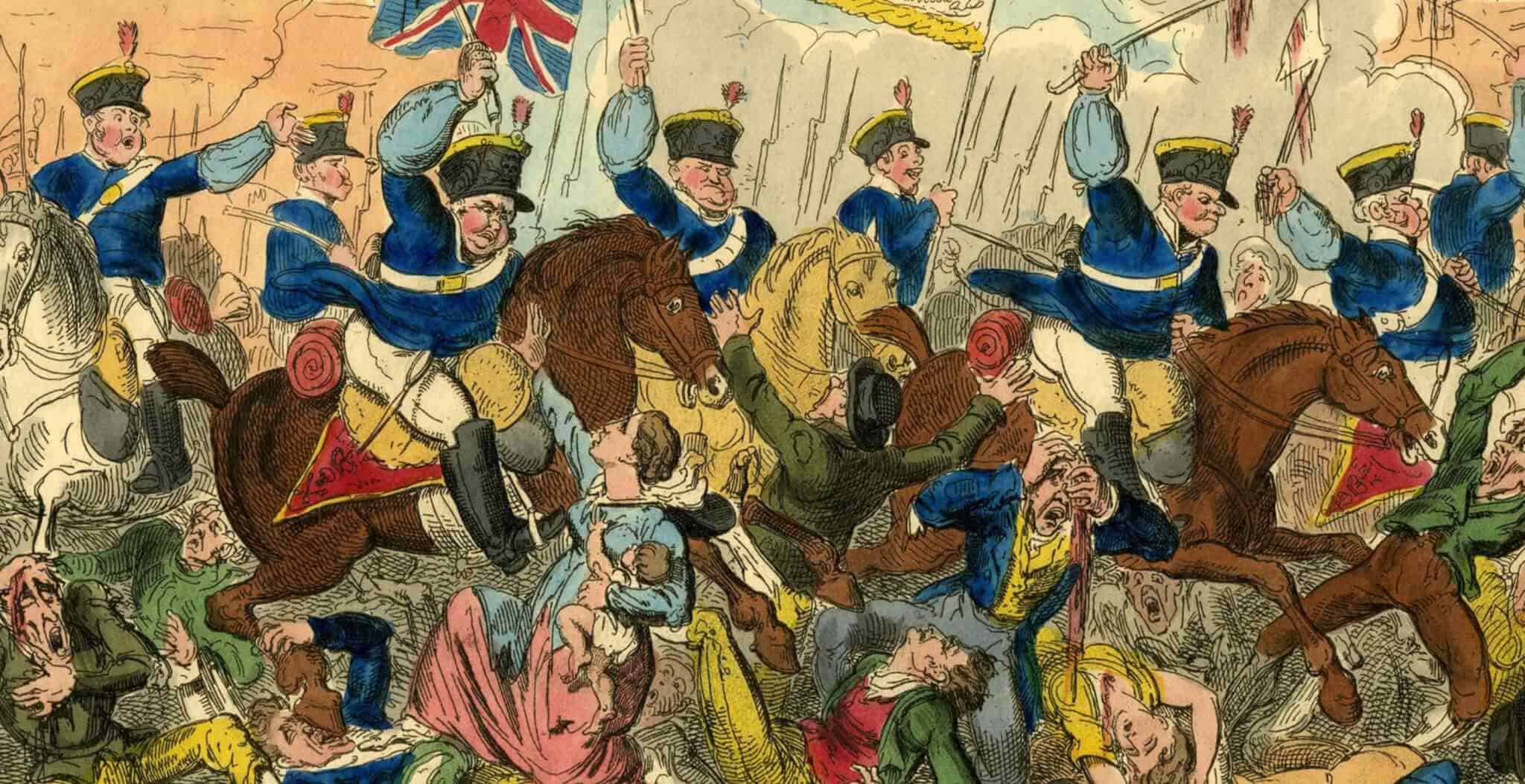
Doug Henwood recently shared the following poem (known as "England in 1819") by Shelly online. While the scorn is obvious, and relatable, it wasn't clear to me what the context was? Fortunately, the poetry foundation has a useful guide to the poem.
This short sonnet was written as the postscript to a letter Shelly wrote to a friend and newspaper editor while in Italy, expressing his outrage and indignation at what was going on back home. I think everyone can relate to the sentiment.
In particular,
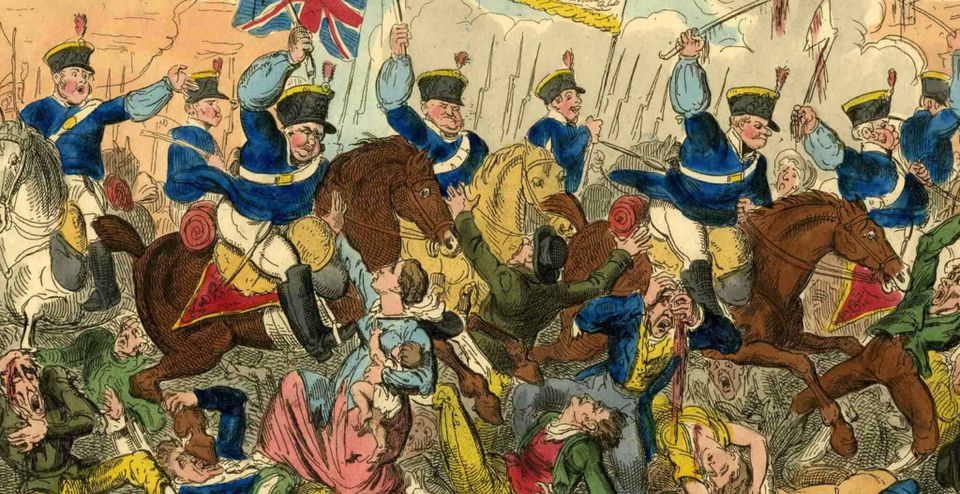
The impetus was the so-called Peterloo Massacre, on August 16, 1819, in the industrializing city of Manchester: an armed cavalry, summoned by infuriated local magistrates, charged with sabers drawn into a crowd of 60,000 peaceful demonstrators, murdering at least 10 and wounding hundreds more.
Shelly also wrote "The Masque of Anarchy" at this time, "a 372-line ballad that reenacts the massacre."
An old, mad, blind, despised, and dying King;
Princes, the dregs of their dull race, who flow
Through public scorn,—mud from a muddy spring;
Rulers who neither see nor feel nor know,
But leechlike to their fainting country cling
Till they drop, blind in blood, without a blow.
A people starved and stabbed in th' untilled field;
An army, whom liberticide and prey
Makes as a two-edged sword to all who wield;
Golden and sanguine laws which tempt and slay;
Religion Christless, Godless—a book sealed;
A senate, Time’s worst statute, unrepealed—
Are graves from which a glorious Phantom may
Burst, to illumine our tempestuous day.
Endnote
❤️ Enjoying Triptych? Let your friends know! Encourage them to sign up via the Triptych website. I can't begin tell you how happy it makes me to see even one new subscriber!
💬 Or maybe you'd consider writing a short endorsement for the "kudos" page? You can just email it to me, or fill out this Google form.
💰 Want to ensure the long term sustainability of this newsletter? Consider becoming a sponsor. Sponsorship helps pay for my hosting costs as well as the newspaper and journal subscriptions which, in turn, allow me to provide "gift links" to all subscribers. A big shout-out to my current paid subscribers, you help keep me motivated!
🧧 Don't want to enter into a long term commitment, but still want to support the newsletter? You can always leave a one-time tip if you like.
🦋 Three links not enough for you? Follow me on Bluesky for all the links that don't make it to the newsletter. The newsletter also has its own Bluesky account.
Thank you!
Member discussion